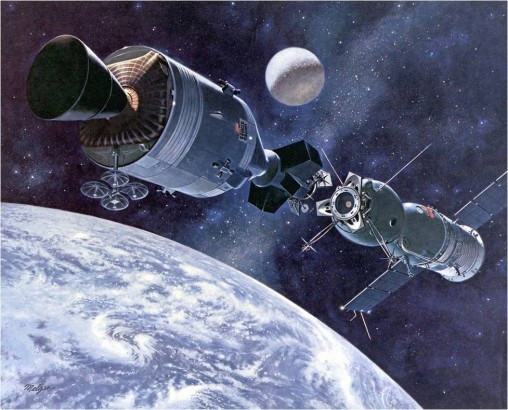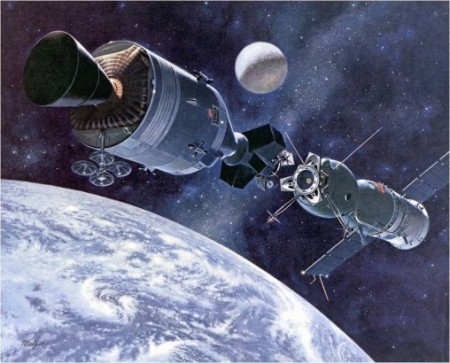
Thirty-seven years ago this month, the first joint United States-Soviet Union spaceflight was successfully conducted. This historic event also marked the first time that spacecraft from two nations successfully rendezvoused and docked in orbit.
The Apollo-Soyuz Test Project (ASTP) was the first international manned spaceflight. The primary objectives of ASTP were to (1) test the compatibility of rendezvous and docking systems of American and Soviet spacecraft, (2) pave the way for international space rescue and (3) set the stage for future joint manned spaceflights.
The United States flew an Apollo Command-Service Module (CSM) with three men on board; Commander Thomas P. Stafford, Vance D. Brand and Donald K. “Deke” Slayton. This was Stafford’s 4th time in space while Brand and Slayton were space rookies. Slayton, one of the original Mercury Seven, had been deprived of a Mercury flight due to what flight surgeons claimed was a heart murmur. ASTP was Slayton’s ultimate vindication from what he always considered to be a specious medical issue.
The Soviet Union flew a Soyuz spacecraft as part of ASTP. It was the 19th such vehicle flown by the Soviets. On board were Cosmonauts Aleksey A. Leonov and Valery N. Kubasov. ASTP was the second spaceflight for both men. Leonov held the distinction of being the first human to perform a spacewalk. That achievement occurred in March of 1965 during the flight of Voskhod 2.
The Apollo CSM carried a special docking module that permitted the spacecraft to dock with the Soyuz. It also functioned as an airlock since the two vehicles employed different pressurization systems. Apollo used pure oxygen pressurized to 5.0 while Soyuz utilized a nitrogen-oxygen atmosphere pressurized at 10.0 psia. Once the Apollo and Soyuz were docked, the docking module also served as conduit between the two spacecraft through which men and cargo could pass.
The ASTP mission began with launch of the Soyuz spacecraft from Baikonur Cosmodrome on Tuesday, 15 July 1975. Seven and a half hours later, the Apollo spacecraft was launched from LC-39B at Cape Canaveral, Florida. On Thursday, 17 July 1975, 52 hours after the mission began, the two spacecraft successfull docked in space. This event marked the first time in spaceflight history that such a feat had been accomplished.
Over the next 48 hours, the crews participated in a variety of activities and exercises. Crew members from each country were able to transfer to the spacecraft of the other via a tunnel in the docking module. Ceremonies were held onboard to mark the occasion. Several dockings and undockings between the two spacecraft were accomplished as well. A variety of space experiments rounded out the schedule.
On Saturday, 19 July 1975, Apollo and Soyuz undocked for the final time. The two spacecraft subsequently maneuvered to achieve widely separated orbits. Following additional time on-orbit in which a variety of space experiments were conducted, each spacecraft returned to Earth. Soyuz did so on Monday, 21 July 1975. Apollo followed on Wednesday, 24 July 1975.
ASTP was the last spaceflight conducted by the United States using an Apollo spacecraft. It also marked the end of America’s initial manned spaceflight effort that began in 1961 with Project Mercury. ASTP was also the country’s last manned spaceflight of the 1970’s. Indeed, not until the first flight of the Space Shuttle in April of 1981 that America would once again fly men into space.
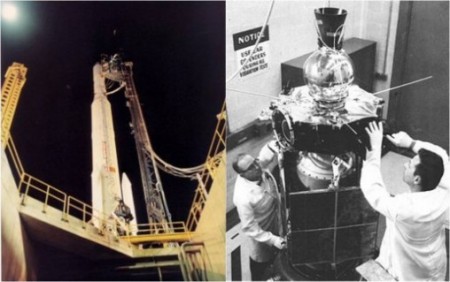
Forty-five years ago this week, the Explorer 35 satellite was launched on a mission to investigate the space environment in the vicinity of the Moon. Among other discoveries, the 230-lb satellite would find that the Moon does not have a magnetosphere like Earth.
Explorer is the longest running satellite program in the history of American spaceflight. Indeed, the first satellite orbited by the United States was Explorer I in January of 1958. Since that time, a total of ninety (90) Explorer satellites have been launched into space for the purpose of investigating the space environments of the Earth, Moon and Sun.
Explorer 35, also known as Anchored Interplanetary Monitoring Platform 6 (AIMP-6), was designed to expand our knowledge concerning a variety of interplanetary space phenomena. The characteristics of the solar wind, interplanetary magnetic field, lunar gravitational field and lunar radiation environment were of particular focus.
Explorer 35 carried an array of scientific instruments to probe the lunar space environment. Key spacecraft instrumentation included multiple magnetometers, geiger tubes, and ion chambers. The spacecraft instrument package also included thermal ion and micrometeoroid detectors as well as a Faraday cup.
On Wednesday, 19 July 1967, Explorer 35 was launched towards the Moon by a Thor-Delta launch vehicle; the 50th such vehicle flown. Lift-off from LC-17B at Cape Canaveral, Florida occurred at 14:19:02 UTC. Flying a direct ascent trajectory, the spacecraft arrived in lunar orbit on Friday, 21 July 1967.
Explorer 35’s orbit about the Moon was highly-elliptical; featuring an apolune of 4,152 nm and a perilune of 432 nm. During its operational lifetime, the satellite found that the Moon has no magnetosphere, that the solar wind impacts the lunar surface directly and that a void in the solar wind exists in the lee of the Moon.
Explorer 35 provided a wealth of scientific data that greatly expanded our knowledge of the Moon and its space environment. After continuously probing that environment for nearly six (6) years, Explorer 35 was permanently turned-off via command from Earth on Sunday, 24 June 1973. While the craft has long since fallen from lunar orbit, the exact time and location of impact are not known.
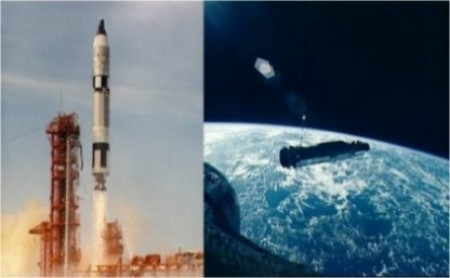
Forty-six years ago this month, NASA Astronauts John W. Young and Michael Collins completed the highly successful mission of Gemini 10. Among other accomplishments, the Gemini 10 crew established a new manned spaceflight record when they rode their Gemini-Agena spacecraft to an altitude of 412 nm above the Earth.
The Gemini Program consisted of ten manned spaceflights flown in a twenty month period starting in March of 1965. Gemini pioneered key technologies required to land men on the Moon including space navigation, rendezvous, docking, orbital maneuvering, long-duration spaceflight and extra-vehicular activity (EVA). Without Gemini, the United States would not have achieved the goal of landing men on the Moon before the end of the 1960’s.
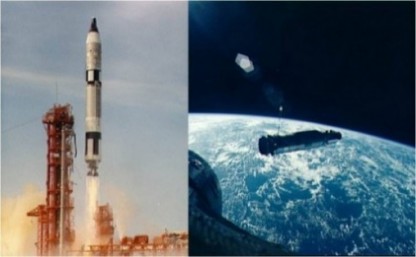
Gemini-Titan 10 (GT-10) was launched from LC-19 at Cape Canaveral, Florida on Monday, 18 July 1966. Lift-off time was 22:20:26 UTC. Roughly 100 minutes earlier, an Agena Target Vehicle (ATV) had been launched from LC-14 into a 162 nm circular parking orbit. Gemini 10 successfully rendezvoused and docked with the ATV at 04:15:00 UTC on Tuesday, 19 July 1966.
Using the Agena’s restartable rocket motor, the docked Gemini-Agena combination was boosted into a 412 nm x 159 nm elliptical orbit. This trajectory exposed the astronauts to flight through portions of the Earth’s radiation belts. Dosimeter measurements revealed that radiation levels at apogee did not constitute a significant health issue for the astronauts. While docked with the Agena, Collins conducted a 49-minute stand up EVA starting at 21:44:00 UTC on 19 July.
After several more burns of the Agena rocket motor, the astronauts undocked from the ATV at 19:00:00 UTC on Wednesday, 20 July 1966. These Agena-aided maneuvers placed Gemini 10 in a position to later use its own orbital maneuver system to complete a rendezvous with the Gemini 8 Agena Target Vehicle at an orbital altitude of 204 nm. This event marked the first time in spaceflight history that a spacecraft successfully rendezvoused with two separate vehicles on the same mission.
At 23:01:00 UTC on 20 July, Collins started a 39-minute EVA in which he floated over to examine the Gemini 8 ATV. He had difficulty trying to hold on to the vehicle, but was able to retrieve a micrometeorite collector for analysis back on Earth. Collins also used a hand-held maneuvering unit powered by nitrogen gas. This effort was short-lived as he quickly ran out of the gaseous propellant. Finally, Collins reentered the Gemini 10 and with some effort was able to secure his hatch.
After 43 orbits, Gemini 10 reentered the Earth’s atmosphere on Thursday, 21 July 1966. The spacecraft landed at 21:07:05 UTC in the Atlantic Ocean, only 3 nm off target. Crew and spacecraft were recovered by the USS Guadalcanal.
Though highly successful, Gemini 10, like all Gemini missions, had its share of problems. But, just like all other Gemini missions, it was in the overcoming of its problems that Gemini 10 moved the United States materially closer to the realization of the nation’s lunar landing goal. While trying times lay ahead for the United States space effort, including a national tragedy, that lofty goal would be realized in the summer of 1969.
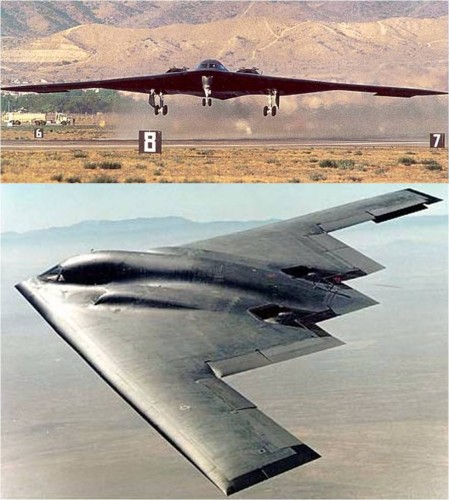
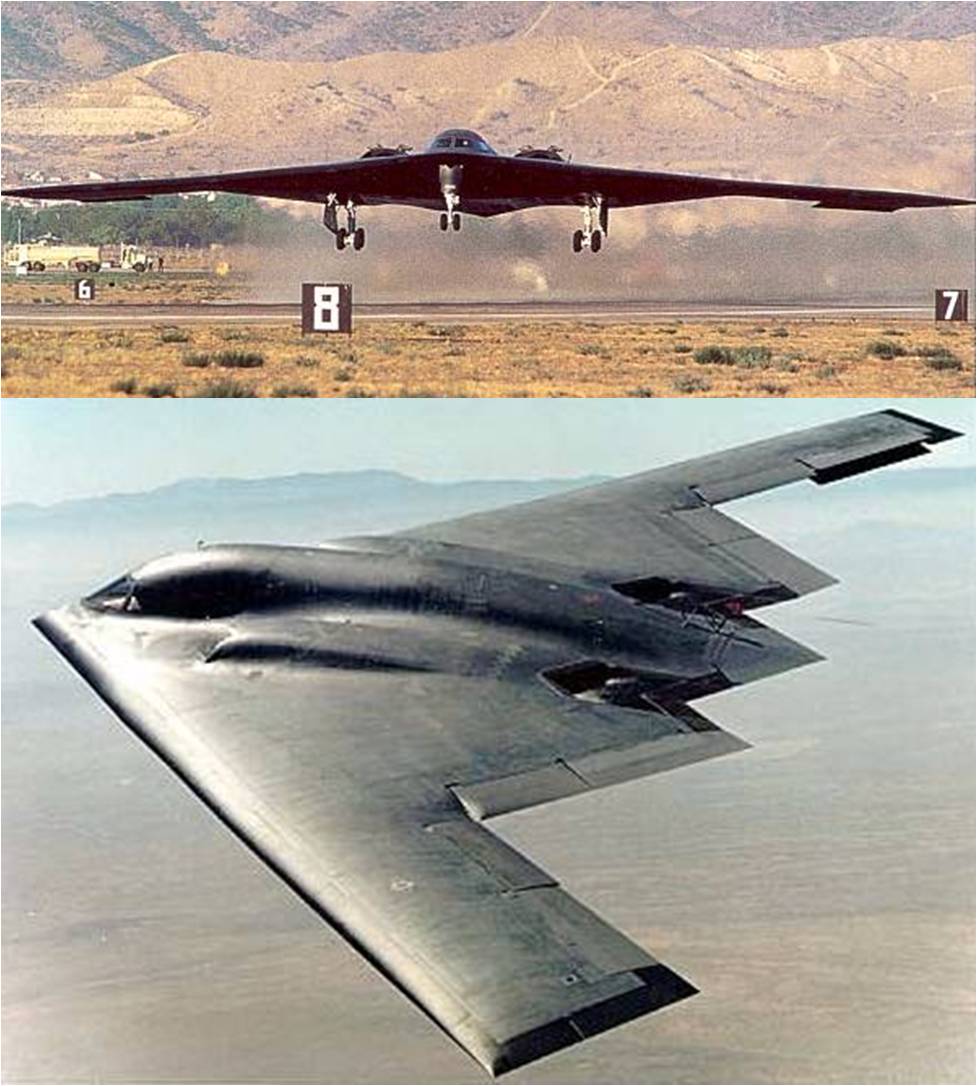
Twenty-three years ago this month, the USAF/Northrop B-2 Stealth Strategic Bomber flew for the first time. The aircrew for the B-2’s maiden trip upstairs included Northrop B-2 Division Chief Test Pilot Bruce J. Hinds (command pilot) and B-2 Combined Test Force Commander USAF Col. Richard S. Couch (co-pilot).
The B-2 traces it lineage to a variety of Northrop flying wing aircraft including the piston-powered YB-35 and jet-propelled YB-49. These 1940’s-era experimental aircraft served as important stepping stones in the evolution of large flying wing technology.
An all-wing aircraft represents an aerodynamically-optimal configuration from the standpoint of high lift, low drag and therefore high lift-to-drag ratio. These favorable aerodynamic attributes translate to high levels of range performance and load-carrying capability. In addition, the type’s high aspect ratio and slim profile provide for more favorable low observable characteristics than traditional fuselage-wing-empennage aircraft geometries.
Arguably the most challenging aspects of creating an all-wing aircraft have to do with flight control and handling qualities. The crash of the second YB-49 flying wing in June of 1948 underscored the insufficiency of aerospace technology at that time to handle these design challenges. It was not until the advent of modern flight control avionics during the 1980’s that the full potential of a flying wing aircraft would be realized.
The B-2 is only 69 feet in length, but has a wing span of 172 feet and a wing area of 5,140 square feet. Gross take-off and empty weights are 336,500 lbs and 158,000 lbs, respectively. Embedded within the wings are a quartet of fuel-efficient F118-GE-100 turbofan engines, each generating 17,300 lbs of thrust. The aircraft has a top speed of about Mach 0.85, an unrefueled range of 6,000 nm and a service ceiling of 50,000 feet. Maximum ordnance load is 50,000 lbs.
B-2 AV-1 (Spirit of America; S/N 82-1066) took-off for the first time from Air Force Plant 42 in Palmdale, California on Monday, 17 July 1989. Supported by F-16 chase aircraft, the majestic flying wing flew a 2 hour 12 minute test mission which concluded with a landing at nearby Edwards Air Force Base. As a first flight precaution, the entire mission was flown with the landing gear down.
The first B-2 airframe to enter the operational inventory was AV-8, the Spirit of Missouri (S/N 88-0329). It did so on 31 March 1994. While initial plans called for a production run of 132 aircraft, only 21 B-2 airframes were actually built. With the 2008 loss of the Spirit of Kansas shortly after take-off from Andersen Air Force Bas in Guam, 20 of these aircraft remain in active service today.
Whiteman Air Force Base in Missouri serves as Air Force’s home for the B-2. From there, the majestic flying wing has flown a multitude of global strike missions to deliver a variety of ordnance with pinpoint accuracy. To date, the B-2 has successfully engaged targets in Kosovo, Afganistan, Iraq and Libya. The B-2 is truly a technological marvel and a national defense asset. As such, it may be expected to be a vital part of the Air Force’s active inventory for decades to come.
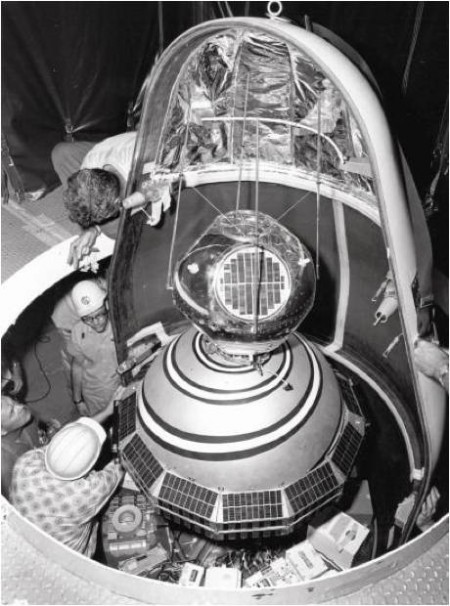
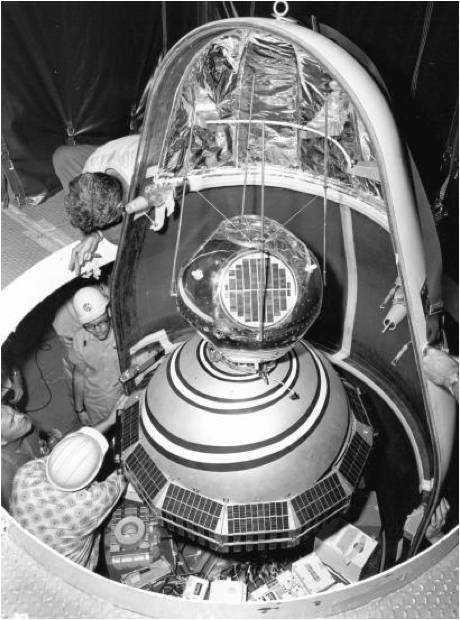
Fifty-two years ago this month, the Transit 2A and GRAB 1 satellites were successfully launched into orbit by a Thor Able Star launch vehicle. This marked the first time that multiple functional satellites were orbited on the same mission.
On Wednesday, 22 June 1960, Thor Able Star 281 roared away from LC-17B at Cape Canaveral, Florida with the Transit 2A and GRAB 1 satellites on board. Both orbiters were designed and developed under the auspices of the United States Navy. Each satellite was successfully placed into its respective target orbit by the powerful hybrid Thor rocket system.
Transit was the first operational satellite navigation system. More formally known as the Navy NAVSAT (Navigation Satellite) System, Transit provided accurate global position data in support of naval worldwide sea operations. The navigation of submarines and surface ships was greatly aided by Transit-provided data as were sundry hydrographic and geodetic surveying programs.
Transit was developed for the Navy by the Applied Physics Laboratory of the Johns Hopkins University (JHU/APL). Work began in 1958 and launch of the first prototype Transit satellite, Transit 1A, took place in September 1959. A number of Transit satellite launches took place over the next 5 years with the system going operational in 1964.
Transit satellites provided position data that was accurate to within about 3 feet. The system revolutionized global navigation and was ultimately used by an untold number of ships and boats. Transit navigational operations ceased in 1996 with the advent of the Global Positioning System (GPS). One of the great benefits of GPS is that position data are provided continuously whereas Transit provided discrete data about once an hour.
The other notable passenger aboard Thor Able Star 281 was the GRAB 1 satellite. GRAB (Galactic Radiation Background Experiment – go figure) holds the distinction of being the first successful Electronic Intelligence(ELINT) satellite in history. Stationed in a 500-mile orbit, its mission was to monitor Soviet radar emissions for the purpose of mapping that country’s air defense radar system. GRAB also monitored electronic activity coming out of Red China and other communist nations as well.
GRAB transmitted reconnaissance information obtained during a data collection pass to special ground stations within its field of view. These data were recorded and found their way to military and civil security agencies for analysis. For obvious reasons, the GRAB program was classified. In fact, it was not until 1998 that the program was declassified.
A confusing aspect of the GRAB 1 satellite is that it is often referred to as the SOLRAD 1 satellite. (SOLRAD stood for Solar Radiation.) This confusion was in fact intentional. The GRAB/SOLRAD satellite in actuality had two scientific packages on board. The publicly-known entity was SOLRAD. As the name implies, its purpose was to gather solar radiation data. Its alter purpose was as a front for the clandestine ELINT mission of the GRAB package.
The dual mission of the GRAB/SOLRAD 1 satellite was very successful. GRAB ELINT operations took place over a 3 month period and included a total of 22 data collection passes over denied territory. In its 10-month operational mission, SOLRAD gathered an extensive amount of solar emissions data which, when correlated with ground measurements, added significantly to our understanding of the Sun.
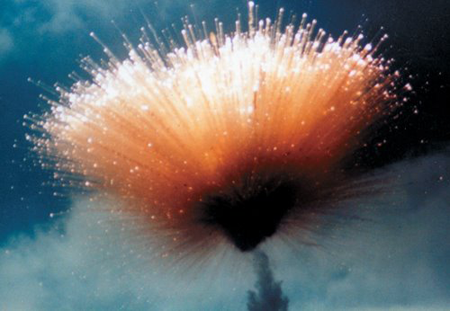
I recently came across this thought-provoking excerpt while conducting final research for our soon to be released Aerospace Lessons-Learned course. These are sobering words, yet extremely accurate. As aerospace professionals, striving for advances in a field fraught with the unknown, we will encounter failure. Without a doubt, we will fail. However, we can minimize the frequency of those failures and thus maximize our rate of success by learning from the past.
You will fail. It is important to understand this certainty. As an aerospace engineer, you will be building vehicles that fly under conditions never before encountered. You will, despite all the analysis and efforts put into the projects, still be voyaging into the unknown. You do not know what you will find. In ancient times, much of the world was a blank. Mapmakers would mark these unknown places with the words “Here There Be Dragons.” Despite all the advances in the first century of heavier-than-air flight, you need to understand that the dragons are still out there. You will fail.
That you will fail is certain. The causes of the failure you will experience, however, may be entirely unknown, and will range from the overarching to the mundane. A failure may come because, with existing knowledge and technology, the goal was unattainable. It may occur due to changing social factors, national needs, and aerospace policies. The failure may come as a result of a grave mismatch between budget and tasks at hand, or a lack of necessary political commitment. The failure may occur because an assumption was made that should have been challenged, because a modification was made that was better left undone or a question went unasked, or some flaw went undetected. And, perhaps worst of all, the failure may occur for reasons you will never truly understand.
While you are being trained in the skills needed to successfully build an aerospace vehicle, you may be less well prepared for events that can occur in the wake of a failure. On the personal level, you will have to deal with the emotional impact of having spent years working on a project, having missed evenings, weekends, and holidays with family and friends, of having overcome an endless series of problems and setbacks, only to see it all fail within a matter of seemingly random and dispassionate seconds.
This wrenching but instructive experience will then be followed by a mishap investigation, which may continue for months. During this time, the project is no longer under the control of project personnel. The investigators are the ones running things. You and the other project personnel have little input into what is done in the course of the effort. You may also face uncertainty over the project’s future in the wake of the failure. As with the immediate aftermath, this will take a toll on you and other project personnel.
The question is not if you will fail. Instead, the question is how you will deal with that failure, and how you will overcome it.
Excerpt above is from Road to Mach 10: Lessons Learned from the X-43a Flight Research Program written by Curtis Peebles, aerospace historian for the Smithsonian Institute.
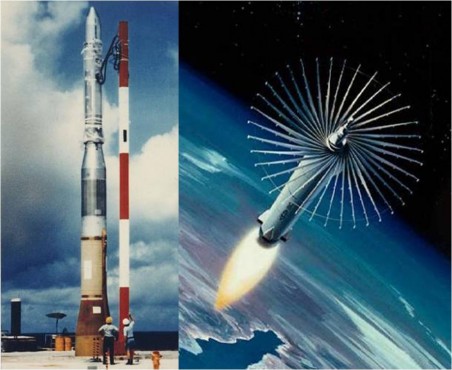
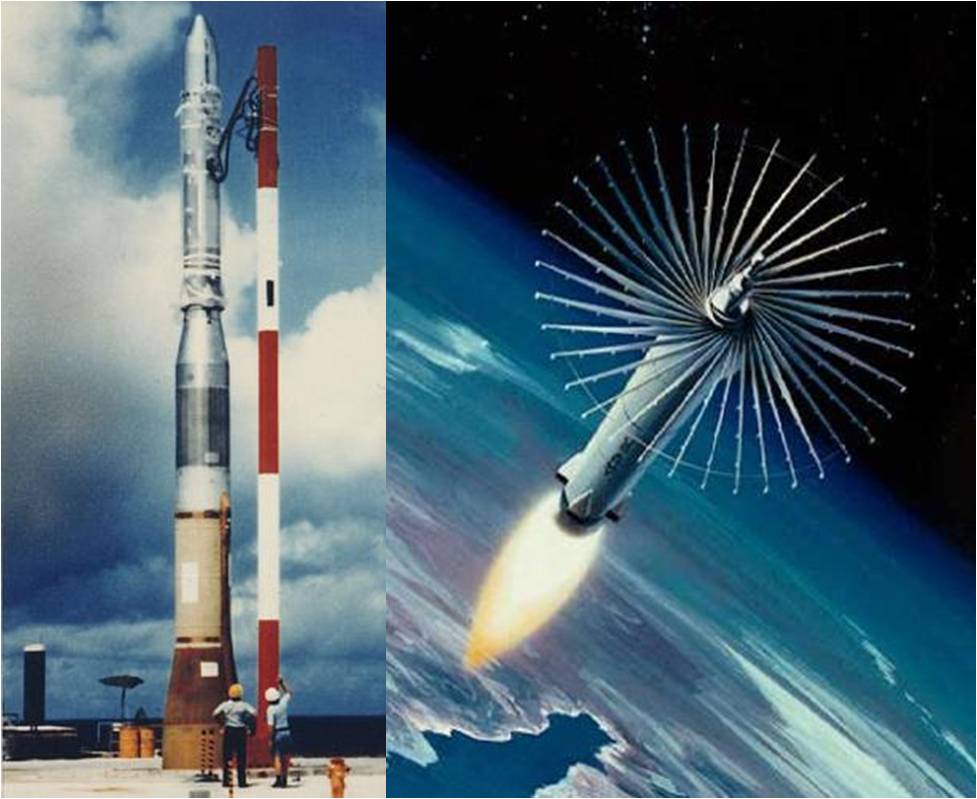
Twenty-six years ago this month, the United States Army’s Homing Overlay Experiment (HOE) anti-missile successfully intercepted a ballistic missile target in space. The feat marked the first time in aerospace history that an exoatmospheric hit-to-kill intercept was achieved.
The HOE Program was a technology demonstration effort conducted by the United States Army (USA) to enable a nonnuclear hit-to-kill intercept capability for application against Soviet nuclear warheads. The Lockheed Company was awarded the development contract in 1978. A total of four (4) exoatmospheric flights tests were conducted from February 1983 through June 1984.
The HOE interceptor was unique in that it employed a 13-ft-diameter radial net that markedly increased the frontal area of the interceptor. The net mechanism was deployed just before target intercept. This unit consisted of 36 aluminum spokes, to each of which was affixed a trio of stainless steel weights or fragments.
The HOE test vehicle was equipped with an IR seeker for target detection in space. Upon target detection, the onboard propulsion system was driven by vehicle guidance and control to place the interceptor on a collision course with the target. At a closing velocity of 20,000 ft/sec, the kinetic energy of the 2,600-lb HOE interceptor was more than sufficient to destroy the target.
A two-stage Minuteman 1 Intercontinental Ballistic Missile (ICBM) served as the HOE booster. It was launched from Meck Island on the Kwajalein Missile Range out in the Marshall Islands. The target vehicle was also a Minuteman missile configured with a dummy warhead. It was launched from 4,500 miles away at Vandenberg Air Force Base, California.
The first three (3) HOE flight tests failed to produce a successful hit-to-kill intercept due to system detection and guidance anomalies. However, on Sunday, 10 June 1984, everything worked as planned when the fourth and final HOE test vehicle successfully intercepted and destroyed the ballistic target via kinetic kill. In the glow of the post-flight celebration, the successful HOE intercept was likened unto hitting a bullet with a bullet.
The HOE flight demonstration success came at a pivotal time in that the vaunted Strategic Defense Initiative (SDI) had begun in January of 1984. The importance of the first-ever hit-to-kill intercept was recognized in 1986 when the HOE Program received that year’s American Defense Technical Achievement Award.
The HOE concept never saw mass production since it was a heavy and rather expensive solution to the hit-to-kill problem. However, its technical legacy extends to the present day. Indeed, the highly capable and ever-evolving Aegis Ballistic Missile Defense (ABMD) system is a vital component of our nation’s Ballistic Missile Defense System (BMDS).
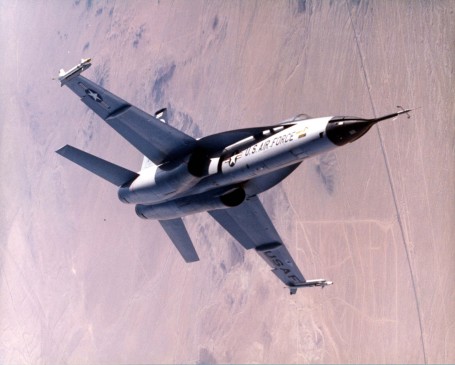
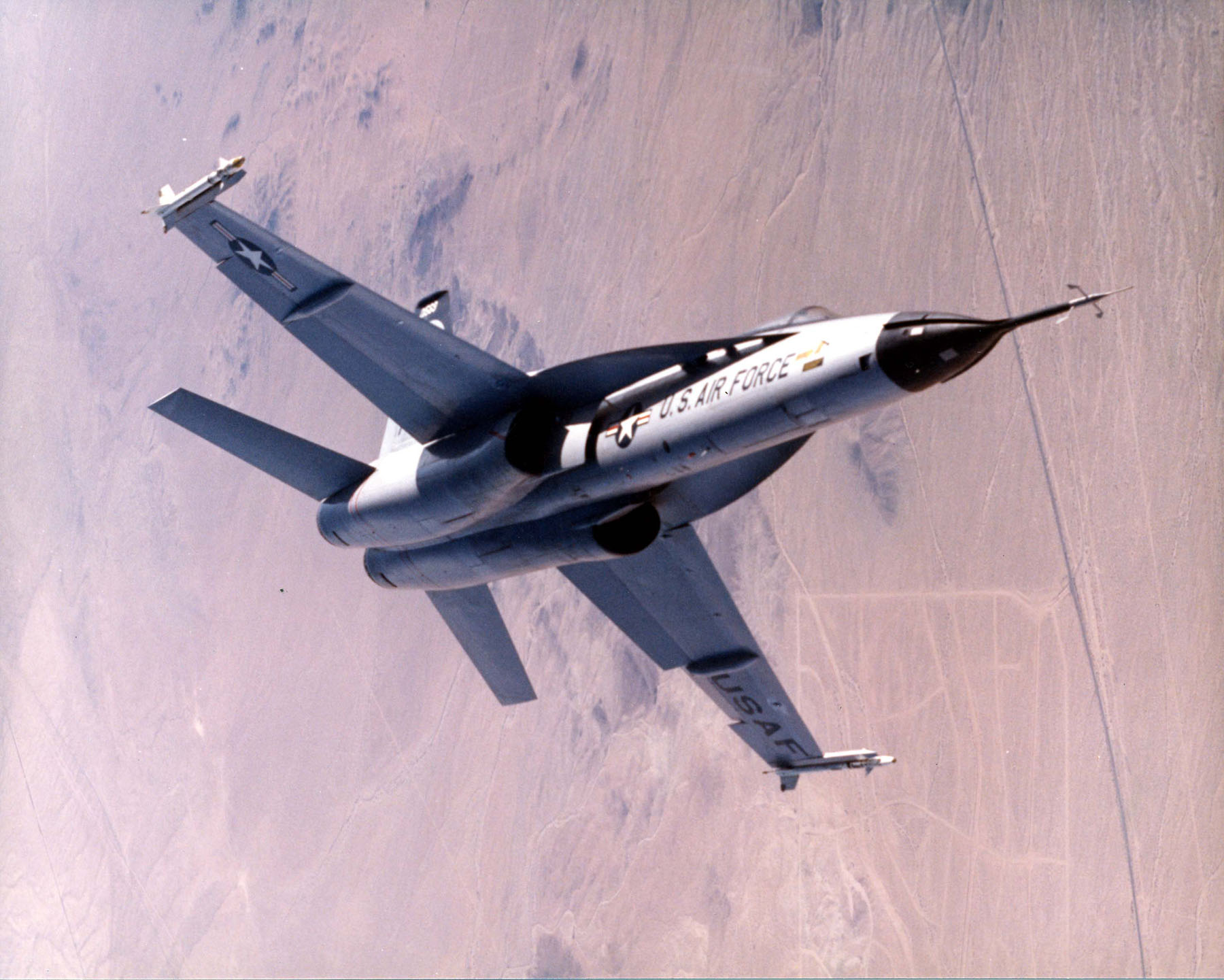
Thirty-eight years ago this month, the No. 1 USAF/Northrop YF-17 Cobra Lightweight Fighter (LWF) prototype made its maiden flight from Edwards Air Force Base, California. Northrop Chief Test Pilot Henry E. “Hank” Chouteau was at the controls of the agile twin-engine jet.
The Lightweight Fighter (LWF) Technology Program was a United States Air Force (USAF) effort to develop a reduced-cost, highly maneuverable combat aircraft. The LWF Program, which began in 1971, ultimately resulted in a competitive fly-off between the Northrup YF-17 and General Dynamics YF-16 in 1974.
The Northrop YF-17 Cobra measured 56 ft in length and had a wingspan of 35 ft. Gross Take-Off Weight (GTOW) was 34,280 lbs. Power was provided by twin General Electric YJ101-100 afterburning turbofans, each generating 14,400 lbs of thrust. The aircraft had a maximum design speed of Mach 1.95, an unrefueled range of 2,600 nm and a service ceiling of 50,000 ft.
The accent on agility and maneuverability led designers to configure the YF-17 with leading edge strakes and twin vertical tails. The leading edge strakes helped alleviate asymmetric vortex shedding and the associated induced yawing moment at high angle-of-attack. Similarly, the twin vertical tails provided enhanced directional stability at high angle-of-attack flight conditions.
YF-17 Ship No. 1 (S/N 72-1569) first took to the air on Sunday, 09 June 1974. The aircraft displayed impressive performance, agility and handling qualitities. On Tuesday, 11 June 1974, the Cobra exceeded the speed of sound in level flight. This marked the first time in United States aviation history that an aircraft did so without using afterburner.
On Wednesday, 21 August 1974, YF-17 Ship No. 2 (72-1570) joined the Northrop LWF flight test force. Together, these two airframes flew 288 flight test sorties for a total of 345 flight hours. During the test program, the Cobra hit Mach 1.95, pulled 9.4 g’s and achieved a maximum altitude beyond 50,000 ft. The jet handled like a dream and lived-up to its advance billing in virtually every way.
Despite the YF-17’s great promise, it did not win the LWF fly-off with the YF-16. Competitions of this sort are often between equals and the final decision can go either way. Nuanced political factors and the like often determine the final outcome. Such was the case in this situation. Both aircraft were exceptional, but only one could be declared the winner.
Happily for American aviation, the YF-17 story did not end with the LWF loss. Indeed, the YF-17’s merits were so obvious to the aviation community that it received new life with the United States Navy. In May of 1975, the team of Northrop and McDonnell Douglas secured the Navy Air Combat Fighter (NAVF) contract to produce a remarkable aircraft that was a direct descendant of the YF-17 Cobra. We know that aircraft today as the F/A-18 Hornet.
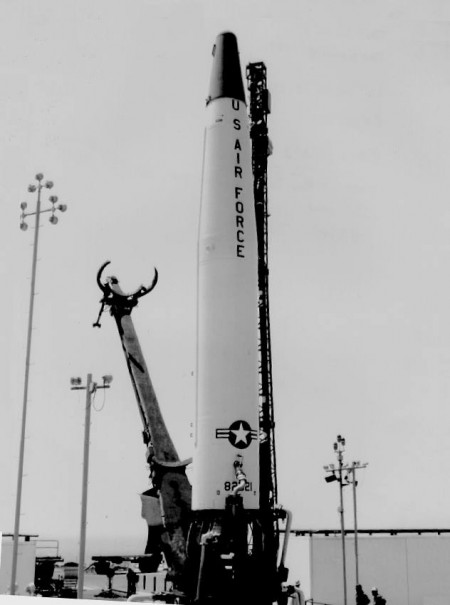
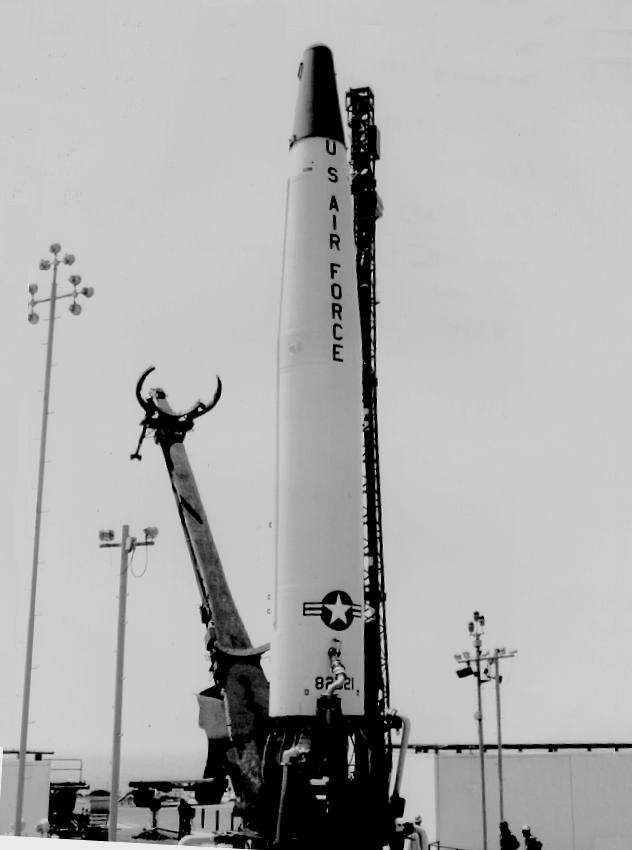
Forty-one years ago this week, the last of the USAF/Boeing Thor Burner II launch vehicle series successfully orbited the SESP-1 space environment satellite. Launch took place from SLC-10W at Vandenberg Air Force Base, California on Tuesday, 08 June 1971.
The Thor Burner family of launch vehicles was designed to orbit classified meteorological satellites for the Defense Meteorological Satellite Program (DMSP). Launched into polar orbit, these satellites aided Keyhole spy satellite operations by ensuring that target imaging took place only over sparsely-clouded terrain.
The liquid-fueled Thor SM-75 missile served as the first stage of the Thor Burner launch vehicle. The Thor airframes selected for the program formerly stood sentinel in Europe in the Intermediate Range Ballistic Missile (IRBM) role. The Burner upper stages utilized solid propellant propulsion.
There were four (4) versions of Thor Burner as distinguished principally by the type of solid propellant rocket motor employed in the upper stage(s) and the orbitable payload mass. Thor Burner 1 used a single Altair-type solid motor upper stage which produced about 5,000 lbs of thrust for 27 seconds. The upper stage and satellite payload were spin stabilized. A total of six (6) Thor Burner I vehicles were flown.
Thor Burner II employed a single Star 37B solid motor which generated 10,000 lbs of thrust for 42 seconds. The upper stage had its own 3-axis flight control system that incorporated multiple hot and cold gas reaction jets. The solid rocket motor and satellite payload were contained within a hemispherically-blunted conical fairing that was colored a distinct orange-red. Thor Burner II flew twelve (12) times.
Thor Burner IIa was a three-stage configuration. A Star 37D (slightly less energetic than the Star 37B) solid motor powered the third stage which was accomodated through the addition of a cylindrical section inserted between the Thor first stage and the hemispherically-blunted conical fairing. Eight (8) Thor Burner IIa vehicles were launched.
The fourth and final Thor Burner variant was essentially a modified Thor Burner IIa vehicle. The second and third stages were now powered by a Star 37XE and Star 37S-IISS rocket motor, respectively. The shape of the external fairing was the same as that of the Thor Burner IIa, only a higher degree of nose blunting was used. A total of five (5) of these vehicles were flown.
The Thor Burner series flew from 1965 through 1980. Twenty-eight (28) of the thirty-one (31) missions were rated as successful. Indeed, the Burner concept proved so effective that variants thereof showed-up on the Atlas and Titan missile programs. Little-remembered today, the Thor Burner Program holds an important place in the annals of American aerospace history.
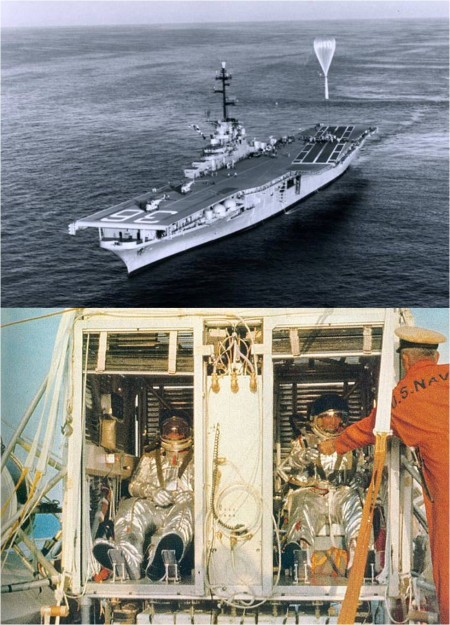
Fifty-one years ago this month, the United States Navy Strato Lab V manned balloon soared to a record altitude of 113,740 feet above the Gulf of Mexico. The crew for this historic flight was Commander Malcolm D. Ross, USNR and Lt Commander Victor G. Prather, USN.
Strato Lab was a United States Navy program to scientifically explore the upper reaches of the stratosphere using manned balloons. An additional focus of the program was the acquisition of aero medical data in support of the United States man-in-space effort.
A total of five (5) Strato Lab balloon flights took place from 1956 to 1961. Each Strato Lab mission was flown by a two-man crew with Malcolm Ross as the flight commander. The Strato Lab I, II, III, and IV aerial excursions attained maximum altitudes between 76,000 and 86,000 feet.
Strato Lab V, which took place on Thursday, 04 May 1961, achieved the highest altitude (113,740 feet) of the program. The purpose of this flight was to perform a maximum test of the Navy’s Mark IV full-pressure suit. As such, Ross and Prather flew in an open gondola with nothing save their individual Mark IV suits providing protection from the space-equivalent environment at high altitude.
Launch took place from the USS Antietam (CV-36) stationed out in the Gulf of Mexico. The size of the Strato Lab V balloon was truly immense. It sported a volume of 10,000 million cubic feet and measured 300 feet in diameter at float altitude. Despite extreme cold and various technical problems, the crew successfully made the trip upstairs in about two and a half hours.
Ross and Prather were sobered by the view they had of earth and space as well as the realization that no person had ever seen either from such a vantage point. They did not linger long before starting the trip home. Descent was largely uneventful. Splashdown occurred within a mile and a half of the USS Antietam. Mission time was 9 hours and 54 minutes.
As they waited for helicopter pick-up, the crew savored their safety, the success of their mission and the outstanding performance of the Mark IV full-pressure suit. Malcolm Ross was the first to be picked-up by the recovery helicopter. With some difficulty, he was safely retrieved from the water-borne Strato Lab V gondola.
Then tragedy struck suddenly and irrevocably as Prather was being hoisted into the helicopter. The naval officer slipped from the retrieval sling and fell into the water. Divers in the helicopter quickly jumped into the ocean in an effort to save Prather. Despite their rapid response, Victor Prather drowned. Ironically, the Mark IV suit, which just hours before had preserved life, now took that life away as it filled rapidly with sea water and dragged Prather below the surface.
For their significant efforts, Ross and Prather (posthumously) were awarded the 1961 Harmon Trophy for Aeronauts. The performance of the Mark IV suit was so outstanding that it served as the basis for the Project Mercury spacesuit. Interestingly, the day after the Strato Lab V mission, USN Commander Alan Bartlett Shepard became the first American in space during the sub-orbital flight of Freedom 7.