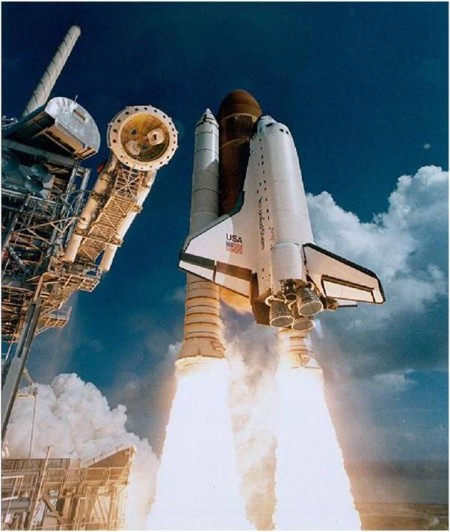
Twenty-seven years ago this week, the Space Shuttle Atlantis was launched on its maiden spaceflight. Known as Mission STS-51J, the flight made Atlantis the fourth member of the Space Shuttle Orbiter fleet to reach Earth orbit.
Mission STS-51J marked the twenty-first orbital flight of the Space Shuttle Program. The primary objective of Atlantis’ first mission was to deploy a Department of Defense (DoD) satellite payload to geostationary orbit. The all-military crew included Commander Karol J. Bobko, Pilot Ronald J. Grabe, Mission Specialists David C. Hilmers and Robert L. Stewart, and Payload Specialist William A. Pailes.
Although classified at the time, the STS-51J payload is suspected to have consisted of a pair of Defense Satellite Communications System (DSCS) satellites. The function of these Lockheed-developed spacecraft was to provide a secure communications capability in support of vital military installations situated across the globe.
Atlantis was launched from LC-39A at Cape Canaveral, Florida on Thursday, 03 October 1985. Lift-off time occurred at 15:15:30 UTC. The new orbiter was successfully inserted into a near-circular orbit having a mean altitude of 219-nm. Orbital inclination and period were 28.5-deg and 94.2 minutes, respectively.
Following deployment from Atlantis’ payload bay, a single Boeing Inertial Upper Stage (IUS) successfully propelled the pair of DSCS satellites into geostationary orbit. With each satellite weighing 5,760 lbs, the total DSCS-IUS stack tipped the scales at 44,020 lbs.
Atlantis orbited the globe 64 times before returning to Earth on Monday, 07 October 1985. The Orbiter touched-down on Rogers Dry Lake at Edwards Air Force Base, California at 17:00:08 UTC. Total mission time was 97 hours, 44 minutes and 38 seconds. From lift-off to landing, Atlantis and her crew flew a total distance of 1,462,203 nm.
History records that Atlantis flew 33 (24.4%) of the 135 missions flown over the life of the Space Shuttle Program. During an “operational” flight career spanning 1985 to 2011, Atlantis and her crews contributed immensely to American spaceflight. Key among many accomplishments were helping to build the International Space Station (ISS), refurbishing the Hubble Space Telescope (HST), launching of the Magellan Probe to Venus, and launching the Galileo Probe to Jupiter.
Like her other stable mates, Atlantis no longer graces the heavens with her presence. She had the honor (?) of flying the final Space Shuttle mission (STS-135) in July of 2011. Now eternally rooted to the ground, Atlantis resides on public display at NASA’s Kennedy Space Center (KSC) in Florida.
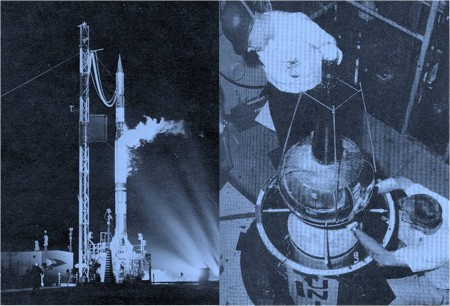
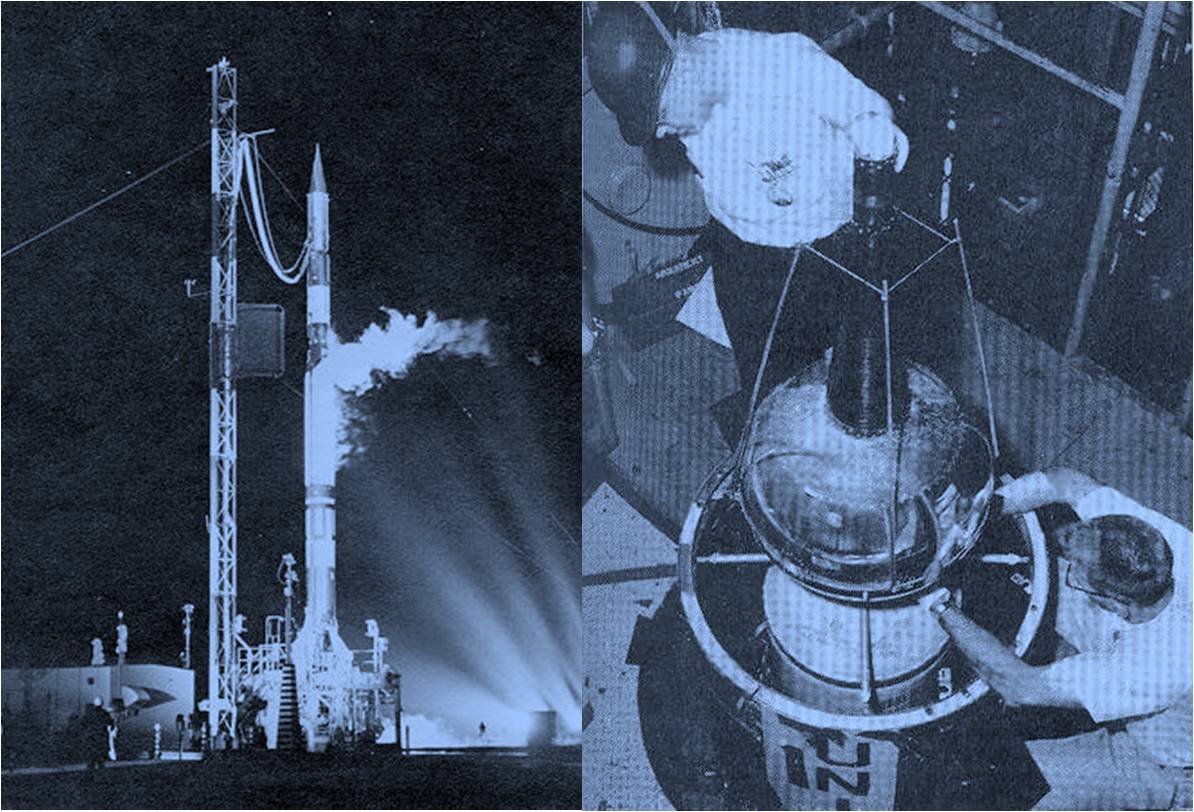
Fifty-three years ago this month, the Vanguard III scientific satellite was successfully launched into Earth orbit by a 3-stage Vanguard Satellite Launch Vehicle (SLV). The last of the pioneering Vanguard satellite series, Vanguard 3 made lasting contributions to the fields of earth science, space physics and satellite technology.
Project Vanguard was a United States satellite launching program that began in 1955. The primary goal was to orbit the nation’s first satellite during the International Geophysical Year (IGY) covering the period from 01 Jul 1957 to 31 December 1958. The Naval Research Laboratory (NRL) had overall technical responsibility for Project Vanguard.
Due to Cold War tensions, the Eisenhower Administration wanted to orbit a scientific satellite using a non-military launch vehicle. Thus, Project Vanguard was tasked with developing both a satellite and a companion launch vehicle. The latter, known as the Vanguard Satellite Launch Vehicle (SLV), was based on the Viking sounding rocket. The 3-stage Vanguard SLV was capable of orbiting an artificial satellite with a maximum weight of 50-lbs.
Vanguard I, weighing a mere 3 lbs, was successfully launched into orbit on Monday, 17 March 1958. While it was the first Vanguard satellite to achieve orbit, it was not the first American satellite. That distinction went to Explorer I, which was launched several weeks earlier on Friday, 31 January 1958. The primary mission of Vanguard I was quite basic in that its purpose was to determine the effects of the space environment on the primitive satellite and its systems.
Vanguard II successfully reached orbit on Tuesday, 17 February 1959. The 23-lb spherical satellite investigated cloud cover patterns in the Earth’s atmosphere during the daylight portion of each orbital pass. Vanguard II also helped to determine the mass density of the upper atmosphere as a function of altitude, latitude, season, and solar activity.
Vanguard III was launched from Cape Canaveral, Florida on Friday, 18 September 1959. Lift-off of the Vanguard SLV-7 from LC-18A occurred at 05:16:00 UTC. The 50-lb satellite was placed into a highly elliptical orbit measuring 1842-nm (apogee) by 276-nm (perigee). The third stage failed to separate from the satellite as planned. However, the effects of such on mission performance were minimal.
Over its 84-day mission period, Vanguard III mapped the magnetic field of the Earth at altitudes between apogee and perigee for latitudes between plus and minus 33 degrees. A micrometeroid detector recorded more than 6,500 impacts in orbit during a sample period of 66 days. Onboard sensors were also employed to measure the X-ray radiation emitted by the Sun and the effects that this radiation had on our atmosphere.
Like its predecessor, the Vanguard III satellite was used to determine the variation of upper atmosphere density with altitude, latitude, season and solar activity. Data were also obtained on the effects of atmospheric drag on orbital altitude decay. On Friday, 11 December 1959, transmission of data from Vanguard III ceased.
Vanguard III was the last Vanguard satellite to be orbited. From a programmatic standpoint, success did not come easy. Indeed, out of eleven (11) launches, only three (3) Vanguard satellites achieved orbit. However, the Vanguard Program’s pioneering contributions to satellite design, launch vehicle development, space tracking, spaceflight technology, earth sciences and space physics were significant.
As of this writing, the trio of Vanguard satellites launched back in the late 1950’s are still in orbit. While the first satellites (the Soviet Union’s Sputnik I and the United States Explorer I) fell out of orbit long ago, Vanguard III is expected to remain in orbit for another 250 years.
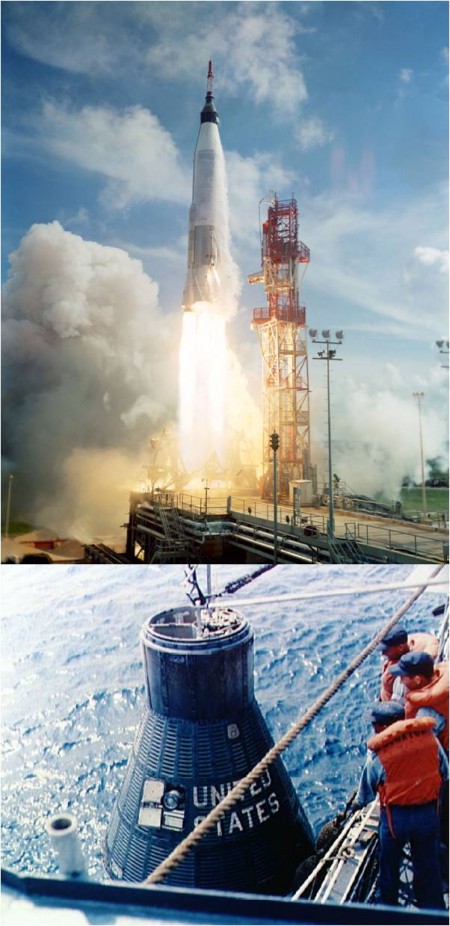
Fifty-one years ago this month, the first Project Mercury unmanned orbital space mission was successfully conducted. Known as Mercury-Atlas No. 4 (MA-4), this spaceflight paved the way for the United States’ first manned orbital mission which took place less than 6 months later.
Project Mercury was America’s first manned spaceflight program. Led by the National Aeronautics and Space Administration (NASA), the basic goals of Project Mercury were simple: (1) Orbit a manned spacecraft around the Earth, (2) investigate man’s ability to function in space and (3) recover both man and spacecraft safely.
The guidelines for achieving the above were equally straightforward: (1) Use existing technology and equipment wherever practical, (2) employ the most simple and reliable approach to system design, (3) place the spacecraft into orbit using an existing booster and (4) conduct a progressive and logical test program.
The Mercury spacecraft was developed and built by the McDonnell Aircraft Corporation. A pair of existing military missiles were manrated for use on Project Mercury. The Redstone Intermediate Range Ballistic Missile (IRBM) was the booster for suborbital flights while the Atlas intercontinental Ballistic Missile (ICBM) served as the launch vehicle for orbital missions.
In the 24 months between May 1961 and May 1963, a total of six (6) manned Mercury spaceflights were conducted with great success. Manned suborbital Mercury-Redstone (MR) missions were flown in May (MR-3) and July (MR-4) of 1961. These initial forays into space set the stage for the more demanding Mercury-Atlas (MA) orbital missions flown in February 1962 (MA-6), May 1962 (MA-7), October 1962 (MA-8) and May 1963 (MA-9).
The spectacular achievements of Mercury’s manned spaceflights was made possible by a supporting series of unmanned test shots. Indeed, between August of 1959 and November of 1961, a total of 20 unmanned tests flights were conducted in support of the manned program. These tests thoroughly investigated all aspects of spaceflight including launch, ascent, orbital ops, reentry, recovery and abort. Investigation of the latter was aided by the use of Little Joe (LJ) launch vehicles.
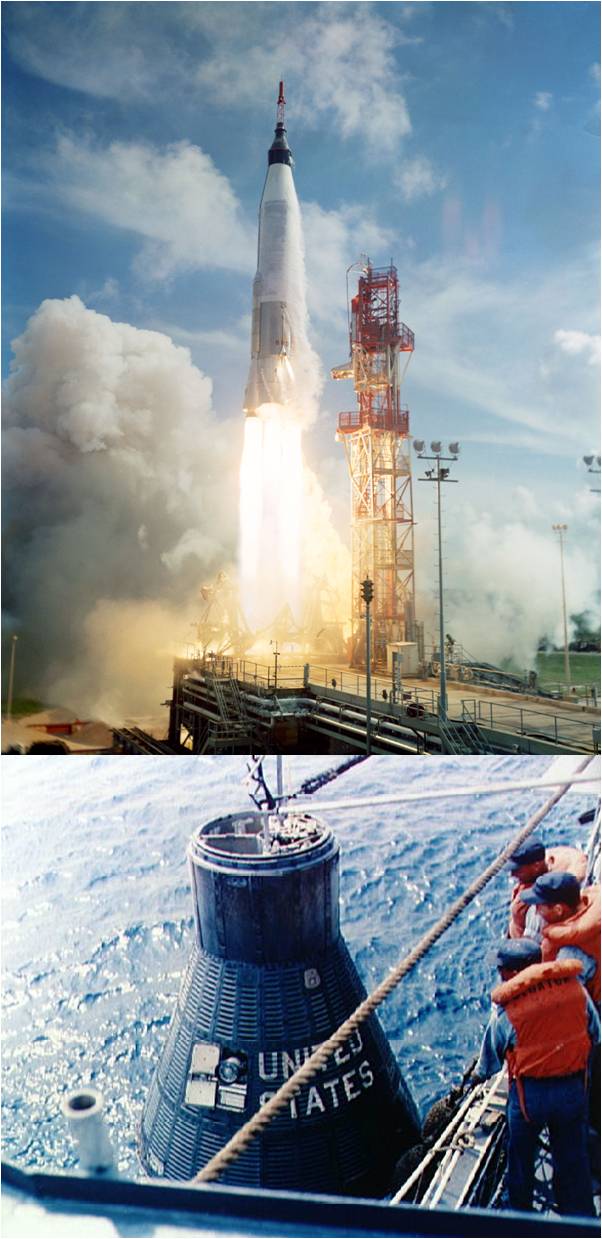
Mercury-Atlas No. 4 (MA-4) was the first successful orbital mission of the Mercury Program. The vehicle was launched from LC-14 at Cape Canaveral, Florida on Wednesday, 13 September 1961. Lift-off of the Atlas D one-and-a-half stage booster occurred at 14:04:16 UTC. The MA-4 payload consisted of an astronaut simulator, several voice tapes, a life support system, a trio of cameras, and instrumentation to measure flight noise, vibration and radiation levels.
MA-4 flew one orbit about the Earth prior to retrofire. Reentry was entirely nominal with drogue and main parachute deployment taking place at 41,750 ft and 10,500 ft, respectively. Splashdown occurred 153 nm east of Bermuda in the South Atlantic Ocean. Mission elapsed time was 109 minutes and 20 seconds. Within 90 minutes of landing, the little spacecraft was recovered by the crew of the USS Decatur.
Other than some minor system glitches, MA-4 achieved all of its mission objectives. Along with the subsequent MA-5 mission, in which a chimp named Enos completed a problem-plagued, but successful two-orbit flight, the United States stood at the threshold of manned orbital spaceflight at the end of November 1961. The historic and long-anticipated day came on Tuesday, 20 February 1962 when NASA Astronaut John Herschel Glenn, Jr. became the first American to orbit the Earth during MA-6.
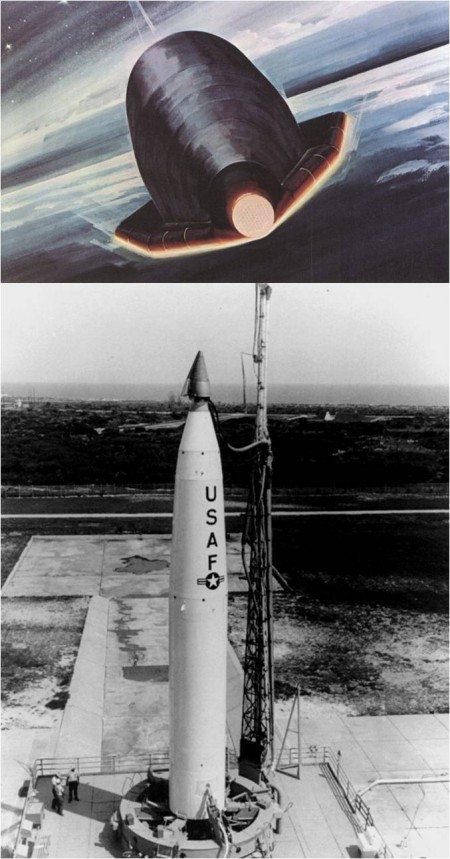
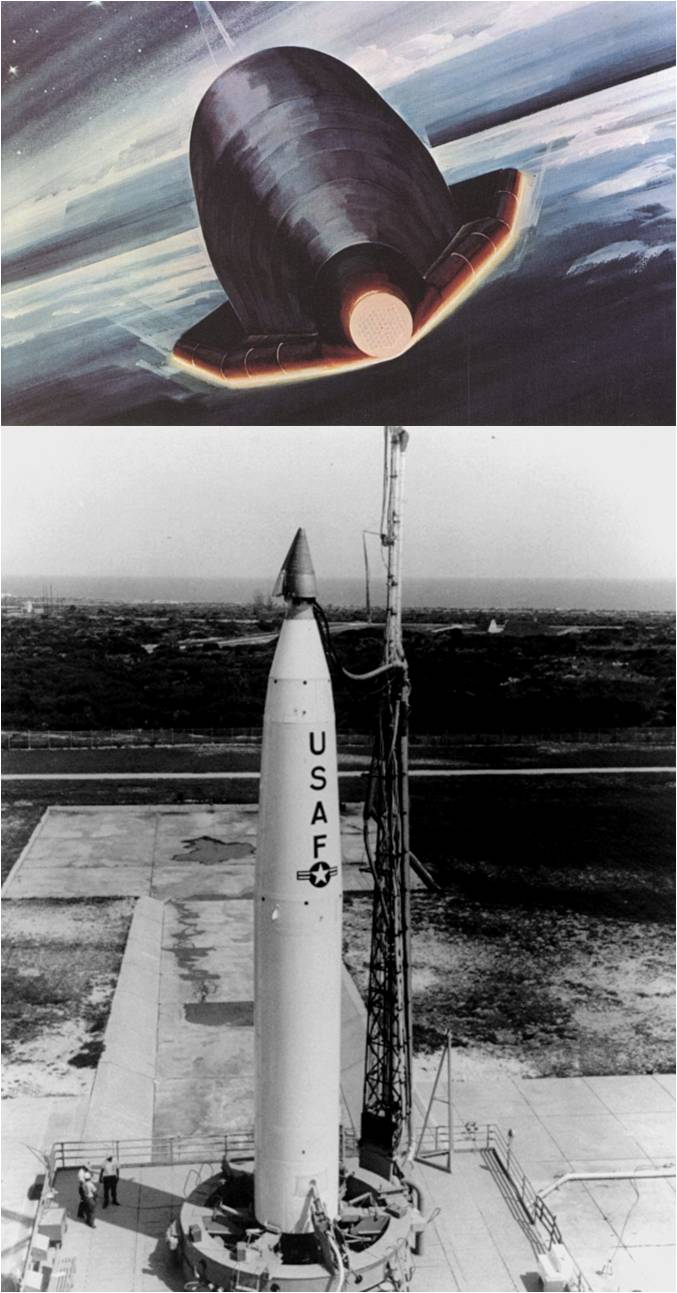
Forty-nine years ago this month, the first ASSET flight test vehicle successfully flew 1,600 nm down the Eastern Test Range following launch from Cape Canaveral, Florida. Boosted atop a Thor launch vehicle, the hypersonic glider reached a maximum velocity of 10,900 mph (Mach 12).
The Aerothermodynamic/Elastic Structural Systems Environmental Tests (ASSET) Program was a United State Air Force flight research effort aimed at exploring hypersonic lifting entry. Programmatic objectives included evaluation of hypersonic lifting vehicle (1) reentry aerodynamic and aerothermodynamic phenomena (2) structural design concepts, and (3) panel flutter characteristics and body flap oscillatory pressures.
The basic ASSET vehicle configuration was a 70-deg delta planform wing with highly-radiused leading edges. The windward surface of this wing was flat and had a 10-deg break in slope roughly two-thirds of the way back from the nose. A blunted cone-cylinder combination was raked into the leeward surface of the wing to form the fuselage of the vehicle. The aft portion of the vehicle was terminated with a flat base region.
There were two (2) types of ASSET vehicles. The Aerothermoelastic Vehicle (AEV) variant was flown to investigate windward panel flutter characteristics and body flap oscillatory pressures. A pair of these vehicles were flown. Each weighed AEV weighed 1,225 lbs and was launched into a suborbital flight path by a Douglas Thor booster.
The Aerothermodynamic Structural Vehicle (ASV) variant was flown to determine external airframe surface temperature, heat flux and pressure distributions in hypersonic flight. These data were used to evaluate materials and structural concepts under reentry conditions. A quartet of these vehicles were flight tested. Each ASV weighed 1,130 lbs and was boosted by a Thor-Delta launch vehicle.
ASSET vehicles were boosted to altitudes between 168 KFT and 225 KFT depending on mission type. AEV entry insertion velocity was roughly 13,000 ft/sec while that for ASV shots varied between 16,000 and 19,500 ft/sec. ASSET performed hypersonic flight maneuvers via a combination of aerodynamic and propulsive controls. The windward-mounted body flap was the lone aerodynamic control surface while a set of 3-axis attitude control thrusters were located in the vehicle’s base region.
The first flight of the ASSET Program (ASV-1) took place on Wednesday, 18 September 1963. ASV-1 lift-off occurred at 09:39 UTC from Cape Canaveral’s LC-17B. Due to booster availability issues, a Thor DSV-2F launch vehicle was used for this mission rather than the higher energy Thor-Delta DSV-2G. Insertion altitude and velocity were 203,200 ft and 16,125 ft/sec, respectively. The ASV-1 mission was highly successful with the exception that the vehicle was lost when it sunk in the South Atlantic during recovery operations.
ASV-1 represented the first time in aerospace history that a lifting vehicle configuration had successfully flown a double-digit Mach number reentry trajectory. Five (5) more ASSET vehicles would fly before completion of the flight research program. The sixth and last mission occurred on Tuesday, 23 February 1965.
The ASSET Program garnered a wealth of first-ever hypersonic vehicle aerodynamic, aerothermodynamic, aerothermoelastic and flight controls data. This priceless information and the valuable experience gained during ASSET contributed significantly to the design and flight testing of the PRIME SV-5D and Space Shuttle Orbiter.
Strangely, only one of the ASSET flight test articles was ever recovered successfully. In particular, ASV-3 was recovered following its 1,800 nm suborbital flight down the Eastern Test Range on Wednesday, 22 July 1964. The recovered airframe is currently on display at the National Museum of the United States Air Force in Dayton, Ohio.
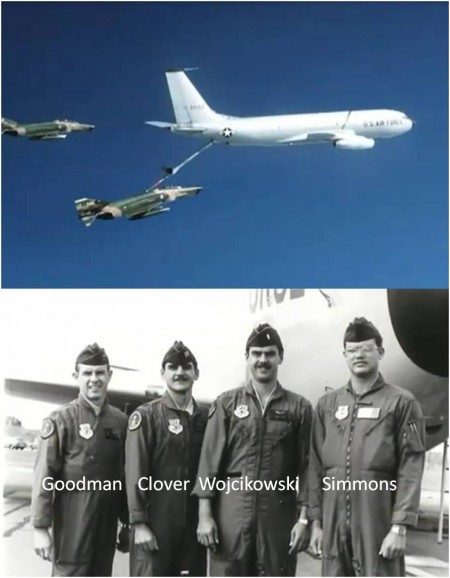
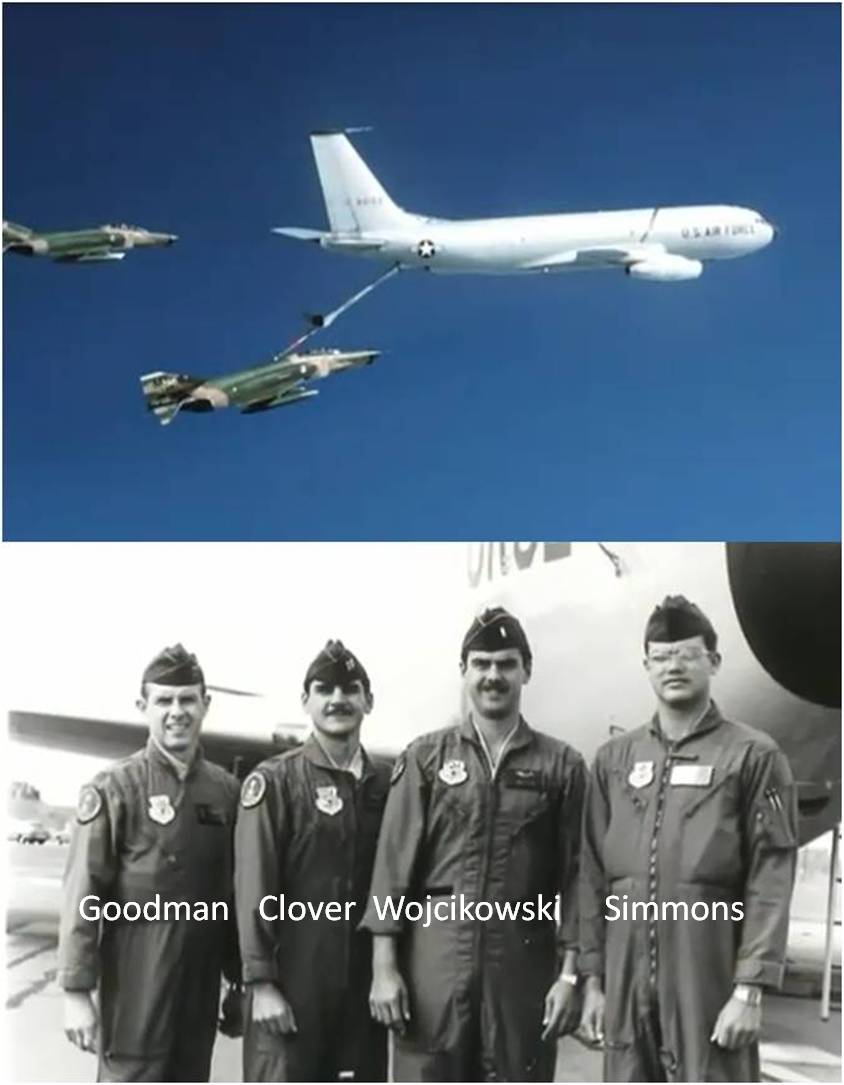
Twenty-nine years ago this week, the valiant crew of a USAF KC-135 Stratotanker performed multiple aerial refuelings of a stricken USAF F-4E Phantom II over the North Atlantic Ocean. Conducted under extremely perilous flight conditions, the remarkable actions of the aerial tanker’s crew allowed the F-4E to remain aloft long enough to safely divert to an alternate landing field.
On Monday, 05 September 1983, a pair of USAF F-4E Phantom II fighter-bombers departed the United States for a routine flight to Germany. To negotiate the trans-atlantic distance, the F-4E’s would require aerial refueling. As they approached the refueling rendezvous point, one of the aircraft developed trouble with its No. 2 engine. Though still operative, the engine experienced a significant loss of thrust.
The problem with the Phantom’s engine caused it to lose speed and altitude. Further, its No. 1 engine began to overheat as it tried to keep the aircraft airborne. As if this were not enough, the aircraft’s starboard hydraulic system became inoperative. Coupled with the fact that the fuel gauge was edging toward empty, the specter of an ejection and parachute landing in the cold Atlantic looked all but certain for the F-4E crew.
Enter the venerable KC-135 Stratotanker and her crew of Captain Robert J. Goodman, Captain Michael R. Clover, 1st Lt Karol R. Wojcikowski and SSgt Douglas D. Simmons. Based with the 42nd Aerial Refueling Squadron, their immediate problem was two-fold. First, locate and navigate to the pair of F-4E aircraft flying somewhere over the open ocean. Second, get enough fuel to both aircraft so the latter could complete their trans-atlantic hop. Time was of the essence.
Following execution of the rendezvous, the KC-135 crew needed to get their steed out in front of the fuel-hungry Phantoms. The properly operating Phantom quickly took on a load of fuel. However, the stricken aircraft continued to lose altitude as its pilot struggled just to keep the aircraft in the air. By the time the first hook-up occurred, both the F-4E and KC-135 were flying below an altitude of 7,000 feet.
Whereas normal refueling airspeed is 315 knots, the refueling operation between the KC-135 and F-4E occurred below 200 knots. Both aircraft had to fly at high angle-of-attack to generate sufficient lift at this low airspeed. Boom Operator Simmons was faced with a particularly difficult challenge in that the failed starboard hydraulics of the F-4E caused it to yaw to the right. Nonetheless, he was able to make the hook-up with the F-4E refueling recepticle and transfer a bit of fuel to the ailing aircraft.
The transfer of fuel ceased during the first aerial refueling when the mechanical limits of the aircraft-to-aircraft connection were exceeded. The F-4E started to dive as it came off the refueling boom. At this critical juncture, Captain Goodman made the decision to follow the Phantom and get down in front of it for another go at aerial refueling. As the second fuel transfer operation began, the airspeed indicator registered 190 knots; barely above the KC-135’s landing speed.
While additional fuel was transferred to the F-4E, it was still not enough for it to make the divert airfield at Gander, New Foundland. The KC-135 performed two more risky aerial refuelings of the struggling Phantom. The last of which occurred at an altitude of only 1,600 feet above the ocean. At times during these harrowing operations, the KC-135 actually towed the F-4E on its refueling boom to help the latter gain altitude.
At length, the F-4E manged to climb to 6,000 feet and maintain 220 knots as its No. 1 engine began to cool. Able to fend for itself once again, the Phantom punched-off the KC-135 refueling boom. Goodman and crew continued to escort the F-4E to the now-close landing field at Gander, New Foundland. The Phantom pilot greased the landing much to the relief and joy of all.
For their heroic efforts on that eventful September day over the North Atlantic, the crew of the KC-135 received the USAF’s Mackay Trophy for the most meritorious flight of 1983.
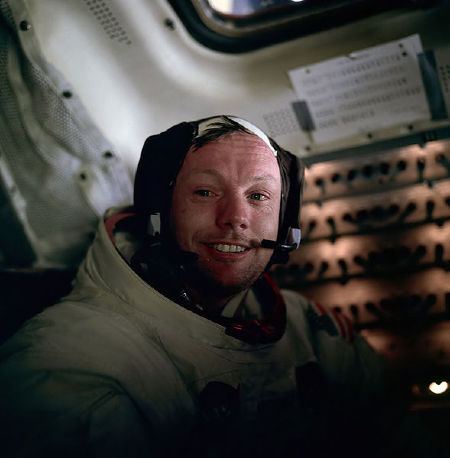
Neil Alden Armstrong, the first man from Earth to set foot upon the Moon, departed from this life on Saturday, 25 August 2012. A native of Wapakoneta, Ohio, Armstrong spent 82 years in mortality.
Flight, both in the air and in space, was a major focus of Neil Armstrong’s life. He served in the Korean War as a Naval Aviator. Later, Armstrong saw duty as an experimental research test pilot for the National Advisory Committee For Aeronautics (NACA) and the National Aeronautics and Astronautics Administration (NASA). His exploits as an astronaut, first with the Gemini Program and then with Project Apollo, are well known.
A licensed pilot by age 15, Neil Armstrong flew many different types of aircraft. A short list includes the F9F Panther, all of the Century Series aircraft (with the possible exception of the F-102 Delta Dagger), the B-47 Stratojet and the KC-135 Stratotanker. Armstrong also piloted the Bell X-1, the Bell X-5 and North American X-15 flight research aircraft.
Armstrong was quite accustomed to danger and experienced a number of life-endangering situations while in flight These include a wartime ejection from a stricken aircraft, overshooting Edwards AFB by 45 miles while flying the X-15, the Gemini VIII emergency in space and a harrowing last second ejection from a faulty Lunar Landing Research Vehicle (LLRV). Each time danger threatened, Armstrong was equal to the challenge and lived to fly another day.
In addition to being a pilot and astronaut, Neil Armstrong was an engineer. His educational attainments included degrees in aeronautical engineering from Purdue University (bachelor of science, 1955) and the University of Southern California (masters of science, 1970). After leaving NASA in 1971, Armstrong served for 8 years as a professor of aerospace engineering at the University of Cincinnati.
Armstrong was the recipient of many awards and accolades during his life. Primary among such were the Presidential Medal of Freedom, Congressional Space Medal of Honor and the Congressional Gold Medal. He also received the Langley Gold Medal, the Robert H. Goddard Memorial Trophy, the Sylvanus Thayer Award, and the Collier Trophy. Neil Armstrong was also an inductee of the Aerospace Walk of Honor and the United States Astronaut Hall of Fame.
Neil Armstrong was the subject of much notoreity as a result of the pivotal role he played in the Apollo 11 lunar landing of July 1969. As the first man from Earth to walk upon the Moon, his name will be forever linked with that epic event. However, Armstrong was neither a man of the limelight nor desirous of being a public figure in any way. Intensely private, he participated in relatively few social settings which would subject him to public scrutiny or interaction. This peculiar personal trait, which he manifested to the end of his life, mystified many and rankled some.
For many of us who were around forty-three (43) summers ago when Neil Armstrong stepped off the Lunar Module Eagle onto the lunar surface at the Sea of Tranquility, his passing is a particularly poignant moment in the history of our lives. Why is that? That we miss him is beyond question. But, that is not really the core of the matter. We will see him again. Just as we will see all those who have passed beyond the veil when it is our turn to depart from mortality.
Rather, the poignancy that we feel stems from where we now find ourselves as a spacefaring nation. Individuals like Neal Armstrong have bequeathed to us a priceless heritage in the realm of spaceflight. That heritage now languishes in a backwater of national complacency, purposeless and lack of vision.
We cannot go the Moon as Neil Armstrong and others once did. The Space Shuttle is gone. We do not even have a spacecraft or a launch vehicle to get to our own space station now orbiting the Earth. We must pay another country $63,000,000 per seat just to get there and back. While we mourn Neil Armstrong’s passing, we mourn even more for that which once was and now is not. Our mourning is made more profound by the realization that we have only ourselves to blame.
The family of Neil Armstrong has requested that we remember him and give him a wink every time we look up at the Moon. Perhaps we should also take a moment and reflect upon what he and other space explorers accomplished as well as the path that they set before us. As we do so, maybe we should hang our heads a bit for the callous treatment of what they left us for safe keeping.
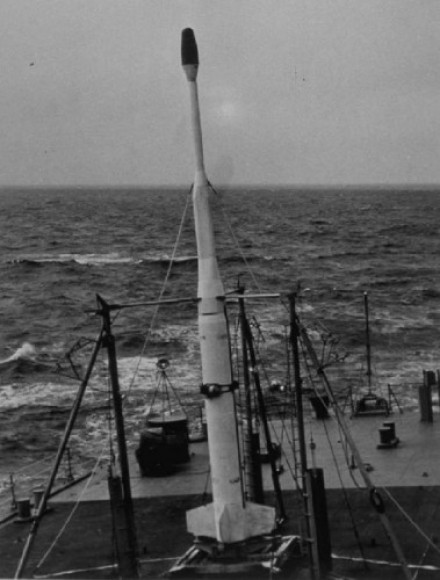
Fifty-four years ago this month, the first of a trio of secret nuclear test shots was conducted from a remote location in the South Atlantic Ocean. These tests were conducted in support of a secret Defense Nuclear Agency program given the code name Operation Argus.
In early 1958, Nicholas Christofilos, a researcher at Lawrence Radiation Laboratory (LRL) theorized that artificial radiation belts could be produced through detonation of a nuclear device in space. These belts would be the result of charged particles becoming trapped within the magnetic field that surrounds the Earth.
Christofilos posited that the artificial radiation belts would interfere with radar tracking and communications as well as the electronics of ballistic missiles and satellites. As such, the Christofilos Effect could be used for tactical effect against an adversary.
At the time Christofilos conceived of his theory, the Cold War between the United States and the Soviet Union raged at a fever pitch. Each country sought to gain any tactical advantage it could over the other. As a result, most strategies for doing so, even the extreme ones, were seriously considered. Often this was so if for no other reason that each country feared that the opposition would exploit a concept that it itself had outright rejected.
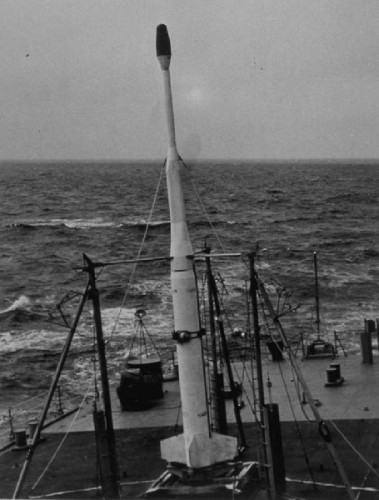
The purpose of Operation Argus was to test the validity of the Christofilos Effect. A triple stage USAF/Lockheed X-17 rocket was modified to carry a W-25 nuclear warhead with a yield of 1.7 kilotons. Three (3) launches would take place with respective detonation altitudes of 87, 158 and 405 nautical miles. Approximately 4,500 individuals participated in Operation Argus with the entire effort classifed as secret.
The point of launch for Operation Argus test shots was located roughly 600 nm southwest of Cape Town, South Africa. This location was chosen for two reasons. First, that portion of the Earth’s magnetic field capable of efficiently holding the charged particles was located between latitudes of 35 and 55 degrees. Second, the limited altitude capability of the booster vehicle required a launch location in the southern hemisphere where the magnetic field dips down much closer to the surface than in the northern hemisphere.
A total of nine (9) United States Navy ships participated in Operation Argus. Each ship left port separately with no knowledge of the others. Collectively known as Task Force 88 (TF-88), these ships came together for the first time at the Operation Argus South Atlantic test location in August of 1958. The missile launching ship for Operation Argus was the famous USS Norton Sound.
Argus I was launched at 02:28:27 UTC on Wedneday, 27 August 1958. The W-25 warhead detonated at 87 nm above the surface of the South Atlantic. This test was quickly followed by Argus II (Saturday, 30 August) and Argus III (Saturday, 06 September) which detonated nuclear devices at altitudes of 158 and 405 nm, respectively.
The results of Operation Argus verified that the Christofilos Effect was indeed a valid concept. The artificial radiation belts produced by the three nuclear detonations lasted for a period of several weeks in space before dispersing. The success of the experimental effort was first made public by the New York Times in March of 1959. However, the full details of the test series remained classified until April of 1982.
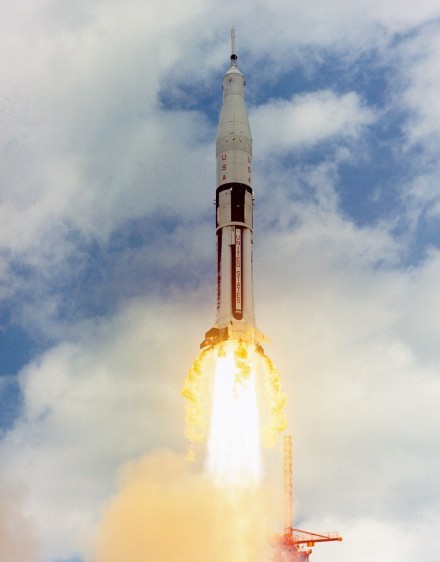
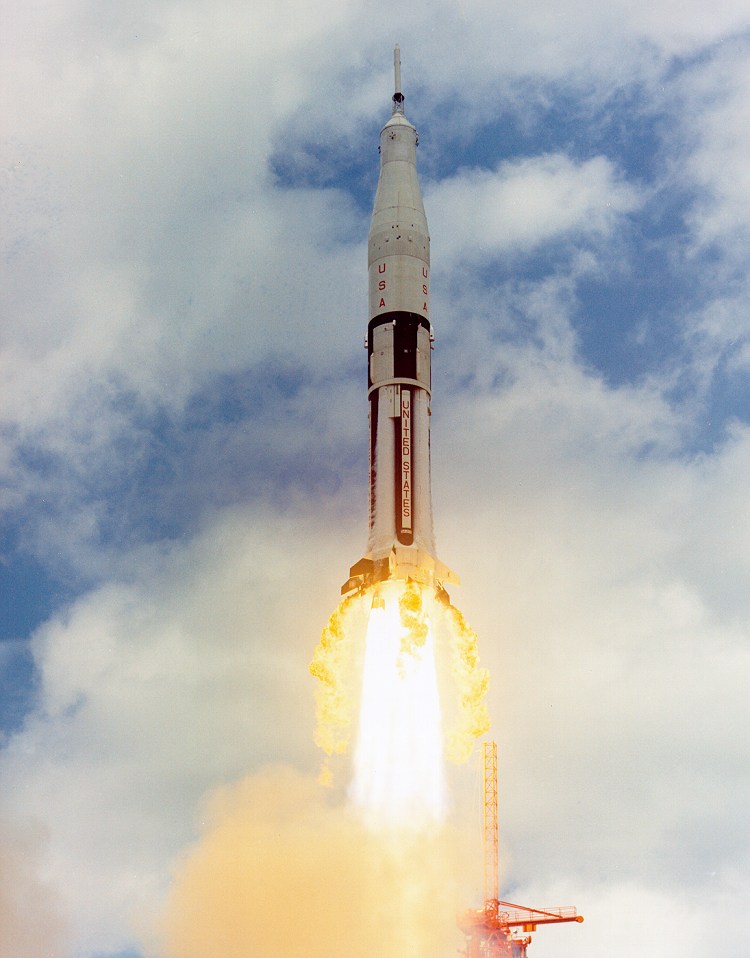
Forty-six years ago this month, the United States successfully conducted a crucial suborbital flight test of the Apollo Command-Service Module (CSM). Known as AS-202, the unmanned space mission was the third involving the Apollo Block I spacecraft and the Saturn IB booster.
The primary goal of Apollo-Saturn Mission 202 (AS-202) was to man-rate the Apollo CSM for spaceflight. Accomplishment of such represented a key step along the way in America’s quest to land men on the Moon before the end of the 1960’s.
The Apollo Guidance and Navigation system flew for the first time on AS-202, as did the fuel cell system the spacecraft would use for electrical power in space. Other critcal systems tested during the mission included the Service Propulsion System (SPS) and Thermal Protection System (TPS).
Weighing 44,294 lbs, the AS-202 CSM was launched into a suborbital flight path by a Saturn IB launch vehicle. Lift-off from Cape Canaveral’s LC-34 occurred at 17:15:32 UTC on Thursday, 25 August 1966. The entire launch stack tipped the scales at a little over 1.344 million pounds at launch.
Riding on 1.6 million lbs of first stage thrust, the CSM reached an altitude of 30.2 nm in 150 seconds. During first stage flight, the Saturn IB’s eight (8) Rocketdyne H-1 engines burned 880,500 lbs of propellants (RP-1 and LOX).
Following first stage separation, the Saturn IVB upper stage then drove the CSM to an altitude of 117 nm in a 450-second burn of its single Rocketdyne J-2 engine. In doing so, this powerplant consumed 228,500 lbs of propellants (LH2 and LOX) at a thrust level of 200,000 lbs.
Shortly after second stage separation, the Apollo CSM SPS was fired for 215 seconds in the first of four (4) separate burns. This resulted in the CSM achieving an apogee of 617 nm. The total energy added by the SPS resulted in the Apollo Command Module (CM) hitting atmospheric interface (400 KFT) in excess of 29,000 feet per second.
The CM reentry trajectory featured a pull-up maneuver executed at 216 KFT. This caused the vehicle to ascend to 266 KFT and scrub-off about 4,200 feet per second in velocity. The CM then resumed a normal reentry characterized by continuing loss of altitude and velocity. By parachute deployment at 24 KFT, the vehicle base heat shield had been subjected to a thermal load of 22,900 BTU’s per square foot.
Splashdown of the AS-202 CM occurred in the north Pacific Ocean at 18:48:34 UTC. The vehicle had flown 13,900 nm downrange of Cape Canaveral and spent 93 minutes and 2 seconds in flight. Because the landing point was 200 nm off-target, the recovery ship (USS Hornet) did not arrive on station for another 8.5 hours.
The flight of AS-202 was extremely successful. So much so, that NASA declared the Apollo Block I Command-Service Module ready to fly men into space. At this point, things looked very good for the Apollo Lunar Landing Program. Sadly, the events of Friday, 27 January 1967 would profoundly affect the lives of a trio of astronauts scheduled to make the first manned flight of an Apollo Block I CSM.
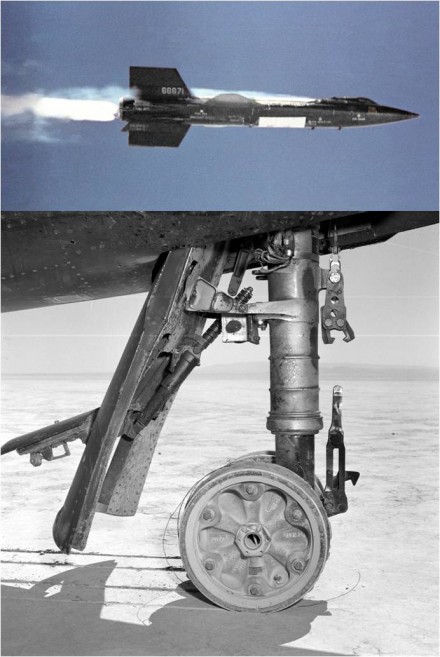
Forty eight-years ago this month, the North American X-15 hit a speed of 3,590 mph (Mach 5.23) in a flight to 103,300 feet. While decelerating through Mach 4.2, the nose gear of the aircraft unexpectedly deployed in flight.
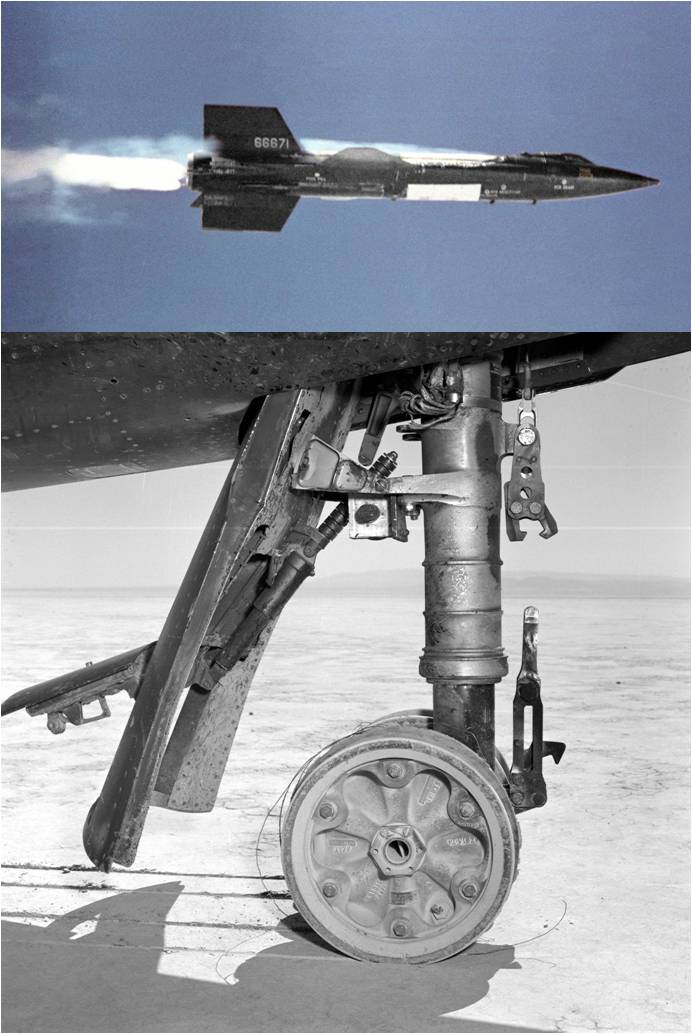
The 114th powered flight of the legendary X-15 Program took place on Friday, 14 August 1964. USAF Major Robert A. Rushworth was at the controls of X-15 Ship No. 2 (S/N 56-6671). The mission would be Rushworth’s 22nd flight in the black hypersonic aircraft.
X-15 drop from the NB-52A (S/N 52-0003) launch aircraft took place over Delamar Dry Lake, Nevada. Seconds later, Rushworth called for 100% power from the X-15’s XLR-99 liquid-fueled rocket engine as he pulled into a steep climb. He subsequently pushed-over and then leveled-off at 103,300 feet.
XLR-99 burnout occurred 80.3 seconds after ignition. At this juncture, the X-15 was traveling at 3,590 mph; better than 5 times the speed of sound. Following burnout, the aircraft slowed and began to lose altitude under the influence of aerodynamic drag.
As the Mach meter needle passed through Mach 4.2, Rushworth heard a loud bang from the airframe. The aircraft became hard to control as it gyrated in pitch, yaw and roll. Rushworth was equal to the moment and brought his troubled steed under control. However, the aircraft had an uncommanded sideslip and Rushworth had to use left aileron to hold the wings level.
Gathering his wits, Rushworth realized that the loud bang he heard was very similar to that which occurred when the nose gear was deployed in the landing pattern. Unaccountably, the X-15 nose gear had deployed in supersonic flight. An unsettling confirmation of Rushworth’s hypothesis came when the pilot spotted smoke, quite a bit of it, in the X-15 cockpit.
As Rushworth neared Edwards Air Force Base, chase aircraft caught up with him and confirmed that the nose gear was indeed down and locked. Further, the tires were so scorched from aerodynamic heating that they probably would disintegrate during touchdown on Rogers Dry Lake. They verily did.
Despite his tireless nose gear, Rushworth was able to control the rollout of his aircraft fairly well on the playa silt. He brought the X-15 to a stop and deplaned. Man and machine had survived to fly another day.
Post-flight analysis revealed that expansion of the X-15 fuselage due to aerodynamic heating was greater than expected. The nose gear door bowed or deformed outward more than anticipated as well. Together, these two anomalies caused the gear uplock hook to bend and release the nose gear. Fixes were subsequently made to Ship No. 2 to prevent a recurrence of the nose gear door deployment anomaly.
Rushworth next flew X-15 Ship No. 2 on Tuesday, 29 September 1964. He reached a maximum speed of 3,542 mph (Mach 5.2) at 97,800 feet. The nose gear door remained locked. However, while decelerating through Mach 4.5, Rushworth heard a bang that was less intense than the previous flight. This time, thermal stresses caused the nose gear door air scoop to deploy in flight. While the aircraft handled poorly, Rushworth managed to get it and himself back on the ground in one piece.
Following another redesign effort, Rushworth took to the air in X-15 Ship No. 2 on Thursday, 17 February 1965. He hit 3,539 mph (Mach 5.27) at 95,100 feet. On this occasion, both the nose gear door and nose gear door scoop remained in place. Unfortunately, the right main landing skid deployed at Mach 4.3 and 85,000 feet.
Thermal stresses were once again the culprit. Despite degraded handling qualities with the landing skid deployed, the valiant Rushworth safely landed the X-15. Upon deplaning, he is reported to have kicked the aircraft in a show of disgust and frustration. Unprofessional maybe, but certainly understandable.
Yet another redesign effort followed in the aftermath of the unexpected main landing skid deployment. This was the third consecutive mission for X-15 Ship No. 2 and Rushworth to experience a thermally-induced landing gear or landing skid deployment anomaly. Happily, subsequent flights of the subject aircraft were free of such issues.
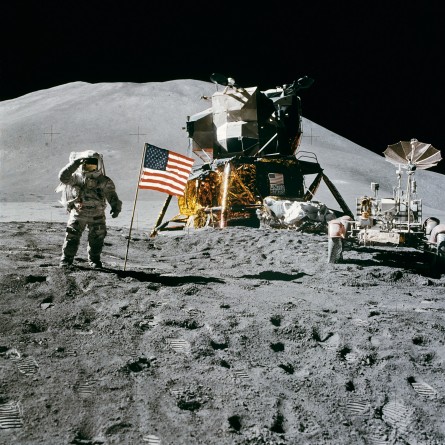
Forty-one years ago today, Apollo 15 landed in the Hadley-Appennine region of the Moon. The fourth manned lunar landing, Apollo 15 was one of the most scientifically successful and geologically diverse of the Apollo Lunar Landing Program.
Apollo 15 lifted-off from LC-39A at Cape Canaveral, Florida at 13:34 UTC on Monday, 26 July 1971. The all-Air Force flight crew consisted of Commander David R. Scott, Command Module Pilot Alfred M. Worden and Lunar Module Pilot James B. Irwin. While Apollo 15 was Scott’s third spaceflight, Irwin and Worden were space rookies.
Apollo 15 was the first of the Apollo “J” missions wherein lunar surface stay duration was extended to three (3) days. This was sufficient time for lunar explorers to conduct a trio of Lunar Extravehicular Activity (LEVA) periods. Each LEVA was approximately 6 to 7 hours in length. The Lunar Module (LM) was provisioned with extra equipment and consumables to support these extended stay operations.
Another “J” mission feature was the use of the Lunar Rover (LR). This electric-powered marvel conveyed astronauts over the lunar surface at speeds up to 8 mph. It’s range from the LM was limited by a “Walkback Limit” of about 5 miles. That is, should the LR fail at any point during a lunar excursion, the astronauts had to have sufficient oxygen remaining to permit them to walk back to the LM a distance of up to 5 miles.
The Apollo 15 Lunar Module Falcon, with Dave Scott and Jim Irwin onboard, landed at 22:16:29 UTC in the Hadley-Appennine region of the Moon on Friday, 30 July 1971. High overhead, Al Worden orbited the Moon alone in the Command Module (CM) Endeavor.
Scott and Irwin conducted 3 separate LEVA’s totaling slightly over 18.5 hours. During these lunar jaunts, they collected 170 lbs of lunar samples. Their biggest find was the so-called “Genesis Rock” estimated to be 4.1 billion years old. As per previous Apollo lunar landing missions, the Apollo 15 astronauts deployed an Apollo Lunar Surface Experiments Package (ALSEP) which permitted monitoring of the lunar environment long after the crew’s return to Earth.
A unique aspect of Apollo 15 was Commander Scott’s conduct of a simple experiment on the lunar surface. With a geology hammer in his right hand and a Falcon feather in his left, the astronaut released both objects simultaneously. Television viewers back on Earth witnessed both items striking the ground at the same moment. This result confirmed Galileo’s assertion that all objects in a vacuum fall at the same rate independent of their mass.
The Apollo 15 lunar explorers’ stay on the Moon lasted almost 67 hours. Falcon lifted-off from the Moon at 17:11:23 UTC on Monday, 02 August 1971. For the first time, lift-off of the LM ascent stage was televised back to Earth via a TV camera attached to the LR. Slightly less than 2 hours later, Scott and Irwin successfully rendezvoused and docked with Worden.
The crew of Apollo 15 started the trip back to Earth at 21:22:45 UTC on Wednesday, 04 August 1971 with a successful Transearth Injection burn of their Service Propulsion System (SPS). Just before leaving lunar orbit, the astronauts deployed a subsatellite designed to conduct a long duration study the lunar plasma, particle, magnetic and gravitational environments. The next day, Al Worden successfully completed a 39-minute EVA in deep space as he retrieved exposed film from cameras located in a special bay within the Service Module (SM).
Endeavor and her crew successfully reentered the Earth’s atmosphere on Saturday, 07 August 1971. During descent, one of the CM’s three (3) main parachutes failed to deploy properly and caused the CM splashdown sink rate to be higher than normal. However, the robust crew survived the subsequent hard landing in the North Pacific Ocean without apparent ill effect. Crew and craft were safely recovered aboard the USS Okinawa.
Mission elapsed time for Apollo 15 was 295 hours, 11 minutes and 53 seconds. The maturation of lunar surface operations that made an extended stay possible and provided for enhanced exploration activities wrought a substantial scientific bounty. Indeed, the knowledge and experience gained during the Apollo 15 mission went a long way to helping the Apollo Program make the most of history’s last pair of manned lunar landing missions; Apollo 16 and Apollo 17.