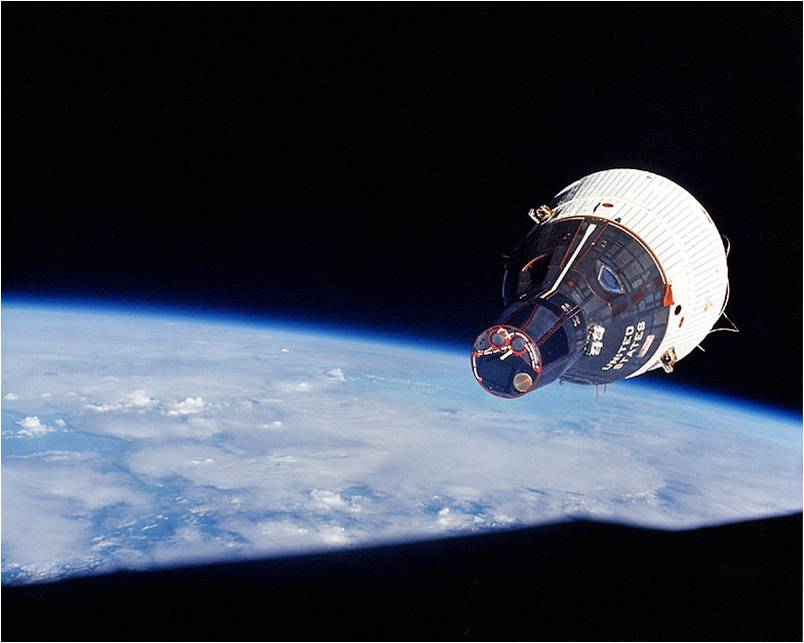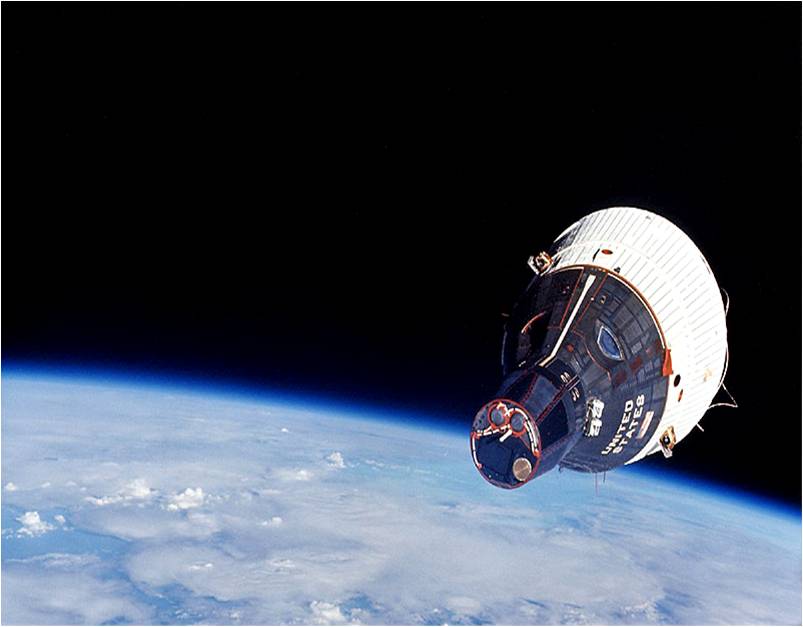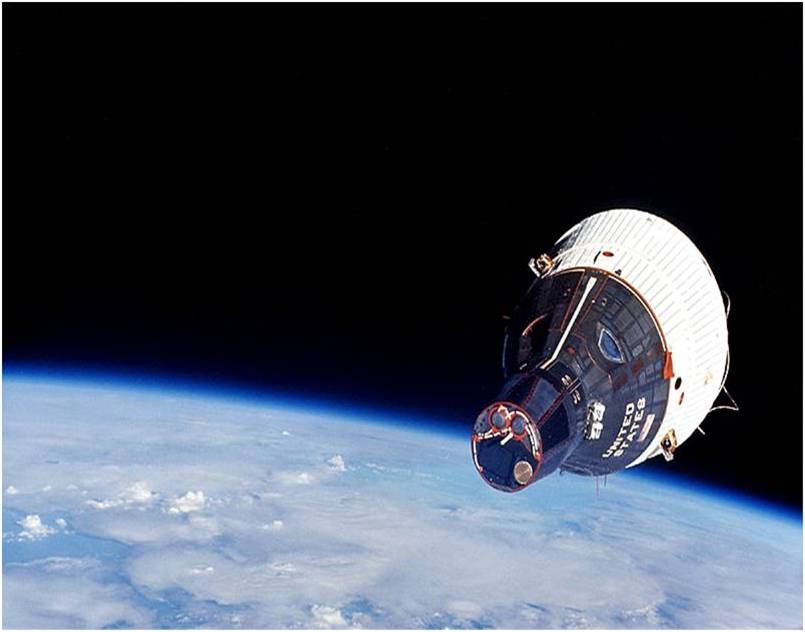
Forty-five years ago this month, Gemini 7 set a new record for long-duration manned spaceflight. The official lift-off-to-splashdown flight duration was 330 hours, 35 minutes and 1 second.
Project Gemini was the critical bridge between America’s fledging manned spaceflight effort – Project Mercury – and the bold push to land men on the Moon – Project Apollo. While the events and importance of this program have faded somewhat with the passage of time, there would have been no manned lunar landing in the decade of the 1960’s without Project Gemini.
On Thursday, 25 May 1961, President John F. Kennedy addressed a special session of the U.S. Congress on the topic of “Urgent National Needs”. Near the end of his prepared remarks, President Kennedy proposed that the United States “should commit itself to achieving the goal, before this decade is out, of landing a man on the moon and returning him safely to the earth.”
At the time of the President’s clarion call to go to the Moon, the United States had accrued a total of 15 minutes of manned spaceflight experience. That quarter hour of spacefaring activity had come just 20 days previous. Indeed, Alan B. Shephard became the first American to be launched into space when he rode his Freedom 7 Mercury spacecraft on a sub-orbital trajectory down the Eastern Test Range on Tuesday, 05 May 1961.
America responded enthusiastically to the manned lunar landing goal. However, no one really knew exactly how to go about it! After considering several versions of direct ascent from the Earth to the Moon, NASA ultimately decided to use a method proposed by engineer John C. Houbolt known as Lunar Orbit Rendezvous (LOR). As a result, NASA would have to invent and master the techniques of orbital rendezvous.
Project Gemini provided the technology and flight experience required for a manned lunar landing and return. In the 20 months between March of 1965 and November of 1966, a total of 10 two-man Gemini missions were flown. During that time, the United States learned to navigate, rendezvous and dock in space, fly for long durations and perform extra-vehicular activities.
The primary purpose of Gemini 7 was to conduct a 14-day orbital mission. This was important since the longest anticipated Apollo mission to the Moon and back would be about the same length of time. Gemini 7 was flown to show that men and spacecraft could indeed function in space for the required period. A secondary goal of Gemini 7 was to serve as the target for Gemini 6 in achieving the world’s first rendezvous between two manned spacecraft.
Gemini-Titan (GT-7) lifted-off from Cape Canaveral’s LC-19 at 19:30:03 UTC on Saturday, 04 December 1965. The Gemini 7 flight crew consisted of Commander Frank F. Borman II and Pilot James A. Lovell, Jr. They were successfully inserted into a 177-nm x 87-nm low-earth orbit. This initial orbit was later circularized to 162-nm.
Borman and Lovell spent the first 10-days of their mission conducting a variety of space experiments. They wore special lightweight spacesuits that were supposed to improve confort level for their long stay in space. However, these suits were not all that comfortable and by their second week in space, the astronauts were flying in just their long-johns.
On their 11th day in space, the Gemini 7 crew had visitors. Indeed, Gemini 6 was launched into Earth orbit from Cape Canaveral and subsequently executed the first rendezvous in space with Gemini 7 on Wednesday, 15 December 1965. Gemini 6, with Commander Walter M. Schirra, Jr. and Pilot Thomas P. Stafford on board, ultimately maneuvered to within 1 foot of the Gemini 7 spacecraft.
While Gemini 6 returned to Earth within 24 hours of launch, Gemini 7 and her weary crew soldiered on. The monotony was brutal. Borman and Lovell had conducted all of their planned space experiments. They had to drift through space to conserve fuel. They couldn’t sleep because they weren’t tired. Borman later indicated that those last 3 days on board Gemini 7 were some of the toughest of his life.
On the 14th day of flight, Saturday, 18 December 1965, Borman and Lovell successfully returned to Earth. Reentry was entirely nominal. Splashdown occurred at 14:05:04 UTC in the Atlantic Ocean roughly 400 miles east of Nassau in The Bahamas. Crew and spacecraft were recovered by the USS Wasp.
Frank Borman and Jim Lovell had orbited the Earth 206 times during their 14-day mission. Each crew member was tired and a little unsteady as he walked the flight deck of the USS Wasp. However, each man quickly recovered his native strength and vitality.
The 14 days that the Gemini 7 crew spent in space were physically and emotionally demanding. Life within the cramped confines of their little spacecraft was akin to two guys living inside a telephone booth for two weeks. Notwithstanding the challenges of that spartan existence, the Gemini 7 crew did their job. Gemini 7 was a resounding success. More, Project Gemini had achieved another key milestone. The Moon seemed a bit closer.
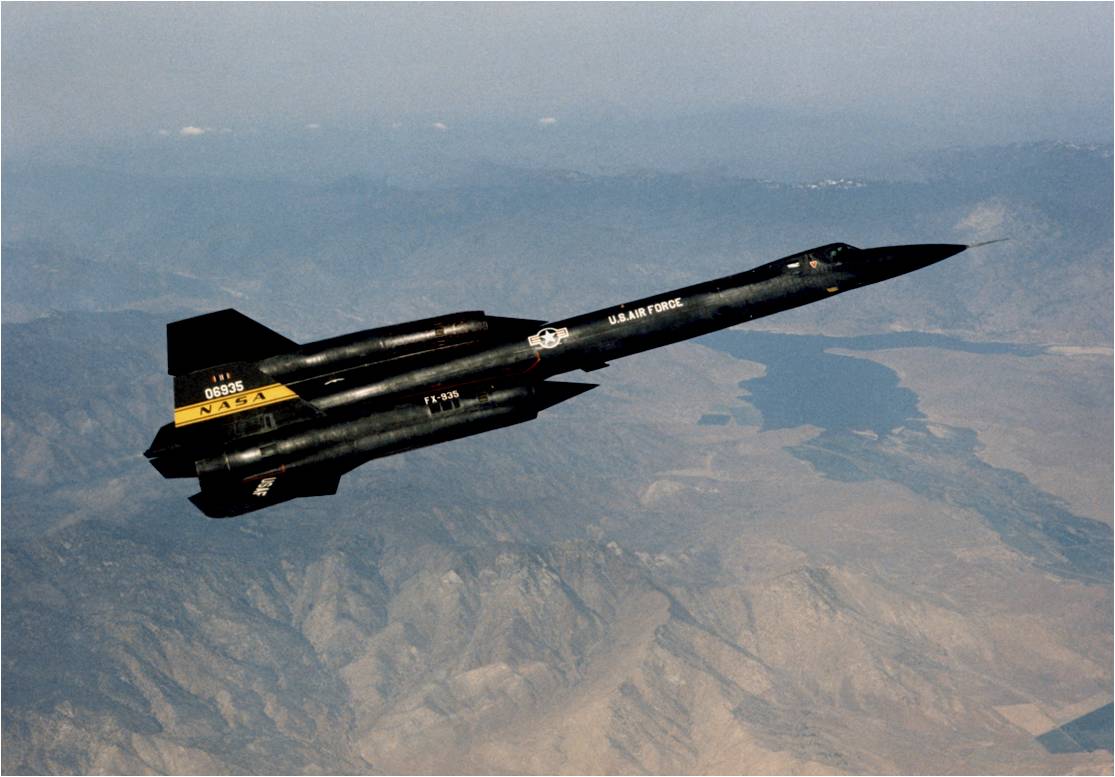
Thirty-one years ago this month, the 2nd and only surviving USAF/Lockheed YF-12A completed its final NASA flight research mission. The flight brought to a close the 10-year period within which the YF-12A was employed as a NASA high-speed flight research platform.
The YF-12A was the interceptor variant of the vaunted Lockheed A-12 Mach 3+ aircraft. Armed with a quartet of Hughes AIM-47A air-to-air missiles, the YF-12A’s mission would be to intercept and destroy incoming Soviet bombers. Lockheed proposed the A-12 variant as a cost-effective replacement for the defunct North American XF-108 Rapier.
The YF-12A differed from the A-12 in that a second crew station was added for the AIM-47A Weapons Systems Officer (WSO). The WSO operated the powerful Hughes AN/ASG-18 fire control radar which had a range on the order of 500 miles. The YF-12A’s forebody chines were truncated back of the axisymmetric nose to accommodate the radar system. Infrared (IR) sensors were installed on the leading edges of the shortened chines.
The Hughes AIM-47A missile measured 12.5 feet in length and 13.5 inches in diameter. Maximum range of the 800-pound missile was in excess of 100 miles. While the type’s intended maximum Mach number was 6, propulsion system development problems limited the demonstrated maximum Mach number to 4. About eighty (80) AIM-47A missiles were produced. Seven (7) of these rounds were test fired in flight. All but one (1) was successful.
Lockheed converted a trio of A-12 aircraft to the YF-12A configuration. The YF-12A aircraft were assigned serial numbers 60-6934 (Ship 1), 60-6935 (Ship 2) and 60-6936 (Ship 3). Ship 1 made the maiden YF-12A flight from Groom Lake, Nevada on Wednesday, 07 August 1963 with James D. Eastham at the controls.
Over the next eighteen (18) months, all three (3) YF-12A aircraft were put through performance flight testing at Groom Lake. Ship 3 set a number of speed and altitude records on Saturday, 01 May 1965. Included was the first air-breathing aircraft speed record in excess of 2,000 mph (2,070.102 mph) and a sustained altitude record of 80,257.86 feet above mean sea level.
USAF liked the YF-12A’s demonstrated performance capabilities. Thus, on Friday, 14 May 1965, the service ordered ninety-three (93) units of the production YF-12A aircraft known as the F-12B. Congress approved the order and allotted $90M to get production going. Unfortunately, United States Secretary of Defense Robert S. McNamara nixed the deal and cancelled the production of the F-12B.
Recall that McNamara also cancelled the XB-70A and X-20A Dyna-Soar and was the genius who championed the ill-posed TFX multiservice aircraft concept. He was also responsible for crafting the absurd rules of air war engagement that resulted in the inordinately large and unnecessary losses of American pilots in Viet Nam. McNamara further cemented his status as the Bane of the U.S. Air Force with the F-12B production wave-off.
Following the F-12B cancellation, YF-12A flight testing by USAF continued through 1969. One aircraft was lost along the way. On Thursday, 14 August 1966, Ship 1 was severely damaged in a landing incident at Edwards AFB and never flew again. Happily, the crew escaped injury.
In December of 1969, NASA initiated a flight research effort using YF-12A Ship 2 and Ship 3. Over the next ten (10) years a wealth of aerodynamic, aero heating, structural and propulsion flight research data were acquired using these unique high-speed assets. A great benefit in this regard was the type’s ability to sustain Mach 3+ flight conditions for periods up to 15 minutes per mission.
YF-12A Ship 3 was lost on Thursday, 24 June 1971 when an inflight fire started due to a failed fuel line in the right-hand J58 turbo-ramjet engine. The USAF crew of pilot Lt Col Ronald J. Layton and WSO Maj William A. Curtis attempted to recover the aircraft to Edwards AFB. However, the fire quickly spread and forced the crew to abandon the aircraft. They ejected safely and survived. Ship 3 was making its 67th flight of the NASA YF-12A flight research effort at the time of its demise.
Following Ship 3’s loss, Ship 2 flew the remainder of the NASA YF-12A high-speed flight research program. It registered a total of 146 missions in that capacity. On Wednesday, 07 November 1979, YF-12A Ship 2 departed Edwards AFB for its final destination; the USAF Musuem at Wright-Patterson AFB, Ohio. The USAF crew consisted of pilot Col James V. Sullivan and USAF Museum Director Richard Uppstrom as the guy in back (GIB).
As a footnote to the current story, the USAF attempted throughout the 1950’s and 1960’s to develop and produce a Mach 3 interceptor. Notable abortive attempts include the Republic XF-103 Thunder Warrior, the North American XF-108 Rapier and the Lockheed F-12B. Doubtless, there have been failed black-world attempts as well. The net result is that a Mach 3 interceptor has yet to grace the USAF production aircraft inventory.
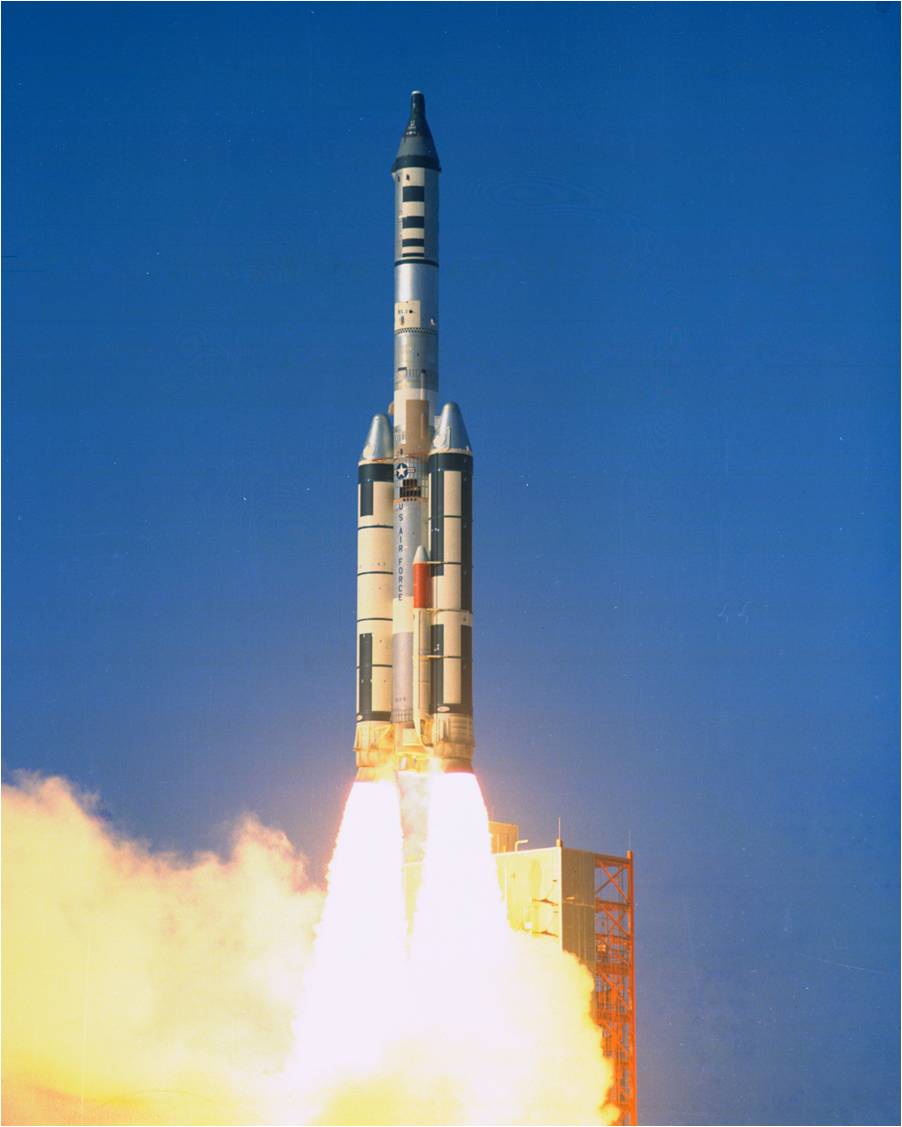
Forty-four years ago this month, a prototype of the USAF/Douglas Manned Orbiting Laboratory (MOL) was launched into Earth orbit. It was the first and only orbital flight test of the military space station.
The Manned Orbiting Laboratory (MOL) was a United States Air Force (USAF) program to develop a military reconnaissance space platform in the 1960’s. Using advanced optic, camera and radar systems, the MOL’s military astronaut crew would have the capability to determine the nature of other countries’ military spaceflight activities. Of particular interest were the clandestine military activities of the Soviet Union and Red China.
Operational MOL missions were to be launched from Vandenberg Air Force Base (VAFB) on the California coast. Doing so would provide a polar orbit capability. The corresponding high orbital inclination meant that the MOL would overfly much of the Earth’s surface during a 24-hour period.
The MOL Program was formally announced to the American public in December of 1963. The prime contractor was the Douglas Aircraft Company (DAC). The MOL was a large cylinder that measured 72-ft in length and 10-ft in diameter. The MOL consisted of 5 segments; main cabin, auxiliary cabin, experiment module, equipment module and a propulsion stage. MOL GTOW was approximately 32,000 lbs.
Fixed atop the MOL was a variant of the NASA Gemini spacecraft known as Gemini B. The crew would ride into and out of orbit in this vehicle. Access to the MOL was via a small door built into the Gemini’s heat shield. Once inside the MOL, the crew would doff their spacesuits and live in a “shirt-sleeve” environment. MOL was to use a two-gas atmosphere (70% oxygen-30% helium). A typical MOL mission was on the order of 30 days.
The Gemini-MOL combination was to be boosted into orbit by a Titan IIIC launch vehicle. First stage propulsion consisted of a pair of solid rocket boosters and a liquid sustainer core. Total lift-off thrust was about 1.84 million pounds. Second stage thrust was on the order of 100,000 pounds. The Titan IIIC third stage was the MOL transtage which produced 16,000 pounds of thrust.
Seventeen (17) MOL astronauts were selected in three (3) groups from the military services. MOL Group 1 (November 1965), MOL Group 2 (June 1966) and MOL Group 3 (June 1967) consisted of eight (8), five (5) and four (4) selectees, respectively. None of these men ever flew a MOL mission. However, seven (7) went on to fly on the Space Shuttle.
On Thursday, 03 November 1966, the one and only flight test of the MOL Program took place. Lift-off from Cape Canaveral’s LC-40 occurred at 13:50:42 UTC. A Titan II propellant tank served as the MOL test article. The previously-flown Gemini 2 spacecraft was employed as a representation of the Gemini B vehicle. The lone MOL prototype flight test was unmanned.
During Titan IIIC ascent, the Gemini 2 spacecraft separated and executed a sub-orbital reentry. The vehicle splashed-down in the South Atlantic Ocean near Ascension Island and was recovered by the USS La Salle. Post-flight inspection of the vehicle’s heat shield hatch revealed that it came through the reentry intact.
Meanwhile, the Titan IIIC launch vehicle successfully orbited the MOL prototype. In addition, a trio of satellites that had accompanied the MOL mock-up was successfully injected into Earth orbit. Thus, the first and only flight test in the history of the MOL Program was entirely successful.
Despite its game-changing mission, a successful flight test and its technical feasibility, the MOL Program never achieved operational status. It was cancelled by U.S. Secretary of Defense Melvin Laird in 1969. The cancellation came at a time when the country had invested heavily in the Apollo Program throughout the 1960’s, the Viet Nam War was escalating and unmanned satellite sensing technology was greatly improved.
The MOL cancellation was a real shot to the solar plexis of the American aerospace industry. Coupled with the contemporaneous ramp-down of the Apollo engineering and development effort, American aerospace would never again see the breath and depth of financial investment it enjoyed in the 1950’s and 1960’s.
The lone surviving physical artifact of the MOL Program was the twice-flown Gemini 2 spacecraft. It is on display today at the Air Force Space and Missile Museum at Cape Canaveral, Florida.
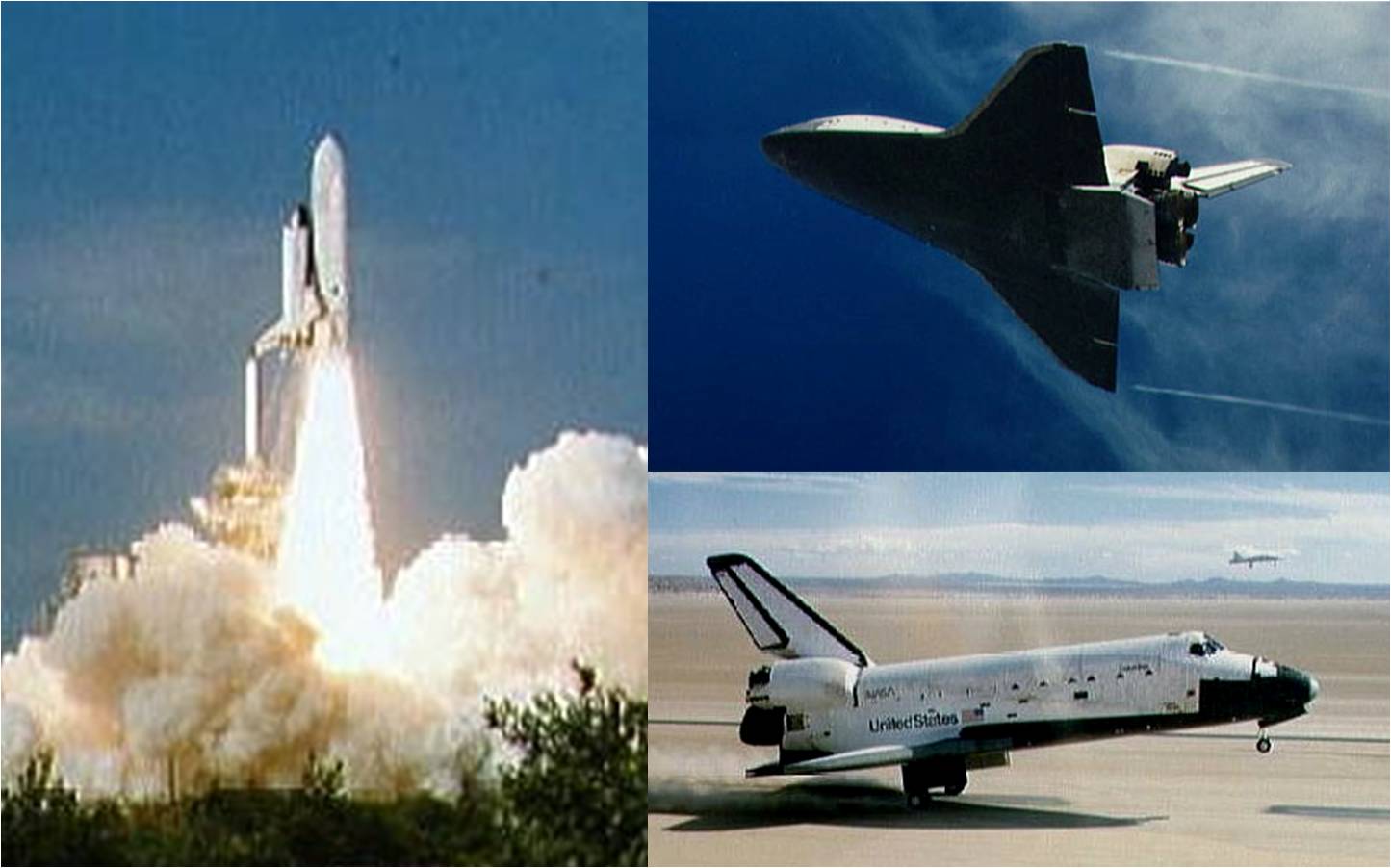
Twenty-nine years ago this month, the Space Shuttle Columbia completed the second mission of the Space Shuttle Program. Designated STS-2, the mission marked the first reuse of a space vehicle for manned orbital flight.
America’s early manned spacecraft – Mercury, Gemini and Apollo – were single-flight vehicles. That is, a new spacecraft was required for each space mission. This was appropriate for meeting the aims of the early space program which concentrated on getting America to the moon before the end of the 1960’s.
The concept of space vehicle reusability came into vogue with the introduction of the Space Transportation System (STS). The original goal of the STS was to provide frequent and routine access to space via a fleet of Space Shuttle vehicles. For the STS to achieve economic viability, this meant flying a Space Shuttle once every two weeks. History has shown that this projected flight rate was optimistic to say the least.
The Space Shuttle vehicle was ultimately configured as a 3-element system consisting of (1) a winged orbiter, (2) a pair of solid rocket boosters (SRB’s) and (3) an external tank (ET). Both the orbiter and the SRB’s were designed to be reusable. The ET would be the only disposable element of the system since higher costs would be incurred in the recovery and refurbishment of this piece of flight hardware than in simply using a new one for each flight.
The Space Shuttle was designed to haul large payloads; on the order of 60,000 and 50,00 lbs into and out of orbit, respectively. With a maximum landing weight of 230,000 lbs, the Space Shuttle Orbiter needed wings to generate the required aerodynamic lift force. Wings were needed to satisfy the Orbiter’s 1,100-nm entry cross range requirement as well.
Following the successful first flight (STS-1) of the Space Shuttle Columbia in April of 1981, preparations began immediately to ready the Orbiter for its equally monumental second flight. The STS-2 flight crew would consist of Commander Joe Henry Engle and Pilot Richard Harrison Truly. STS-2 would be the first orbital spaceflight for both men.
On Thursday, 12 November 1981, the Space Shuttle Columbia lifted-off at 15:09:59 UTC from Cape Canaveral’s LC-39A. Ascent flight was nominal and Columbia was placed into a 125-nm x 120-nm orbit. At this point, Columbia became the first manned spacecraft to achieve Earth-orbit twice. It was an extra special occasion for Richard Truly inasmuch as it was his 44th birthday.
Engle and Truly anticipated 5-days in orbit with their orbital steed. However, one of Columbia’s three fuel cells failed early-on and the mission was reduced to just over two days. Nonetheless, the crew achieved 90 percent of the mission’s goals. They even remained awake during a scheduled sleep period to exercise the new Canadian Remote Manipulator System (RMS).
On Saturday, 14 November 1981, Columbia and her crew successfully completed STS-2 by landing on Rogers Dry Lake at Edwards Air Force Base, California. Main gear touchdown occurred at 21:23:11 UTC. Joe Engle flew the entire reentry manually. He holds the distinction of being the only pilot to manually fly a lifting space vehicle all the way from orbit to landing. Engle completed a total of 29 Programmed Test Input (PTI) aerodynamic maneuvers in the process.
STS-2 was a monumental success. Columbia became the first space vehicle to be reused for manned orbital space operations. Other Orbiters would follow including Challenger, Atlantis, Discovery and Endeavor. As of this writing, 132 STS missions have been flown.
As a footnote, Joe Engle went on to command one more Space Shuttle mission in 1985 (STS-51I). He retired from the USAF in November of 1986. Richard Truly served as Commander of STS-8 in 1983. That mission featured the first night launch and landing of the Space Shuttle. Richard Truly also served as NASA Administrator from May of 1989 to May of 1992.
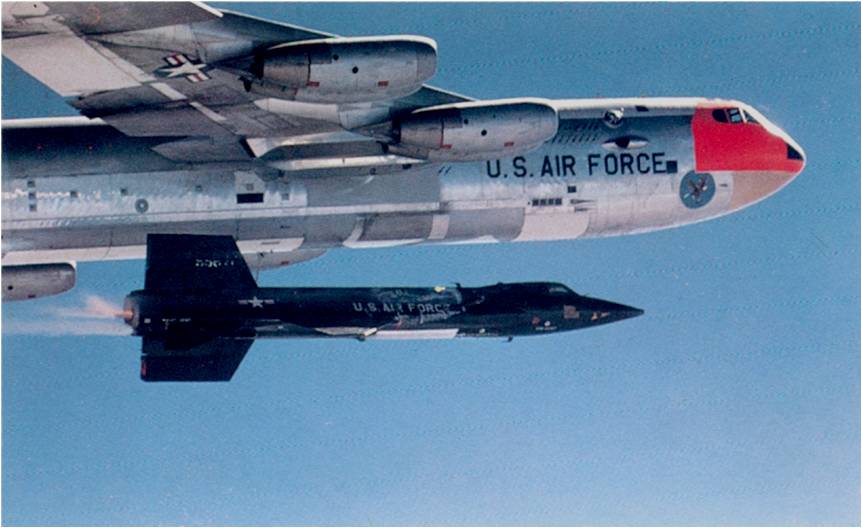
Forty-nine years ago this week, the USAF/NASA/North American X-15 became the first manned aircraft to exceed Mach 6. United States Air Force test pilot Major Robert M. White was at the controls of the legendary hypersonic flight research aircraft.
The North American X-15 was the first manned hypersonic aircraft. It was designed, engineered, constructed and first flown in the 1950’s. As originally conceived, the X-15 was designed to reach 4,000 mph (Mach 6) and 250,000 feet. Before its flight test career was over, the type would meet and exceed both performance goals.
North American built a trio of X-15 airframes; Ship No. 1 (S/N 56-6670), Ship No. 2 (56-6671) and Ship No. 3 (56-6672). The X-15 measured 50 feet in length, had a wing span of 22 feet and a GTOW of 33,000 lbs. Ship No. 2 would later be modified to the X-15A-2 enhanced performance configuration. The X-15A-2 had a length of 52.5 feet and a GTOW of around 56,000 lbs.
The Reaction Motors XLR-99 rocket engine powered the X-15. The small, but mighty XLR-99 generated 57,000 pounds of sea level thrust at full-throttle. It weighed only 910 pounds. The XLR-99 used anhydrous ammonia and LOX as propellants. Burn time varied between 83 seconds for the stock X-15 and about 150 seconds for the X-15A-2.
The X-15 was carried to drop conditions (typically Mach 0.8 at 42,000 feet) by a B-52 mothership. A pair of aircraft were used for this purpose; a B-52A (S/N 52-003) and a B-52B (S/N 52-008). Once dropped from the mothership, the X-15 pilot lit the XLR-99 to accelerate the aircraft. The X-15A-2 also carried a pair of drop tanks which provided propellants for a longer burn time than was possible with the stock X-15 flight.
The X-15 employed both aerodynamic and reaction flight controls. The latter were required to maintain vehicle attitude in space-equivalent flight. The X-15 pilot wore a full-pressure suit in consequence of the aircraft’s extreme altitude capability. The typical X-15 drop-to-landing flight duration was on the order of 10 minutes. All X-15 landings were performed deadstick.
On Thursday, 09 November 1961, USAF Major Robert M. White would fly his 11th X-15 mission. The X-15 and White had already become respectively the first aircraft and pilot to hit Mach 4 and Mach 5. On this particular day, White would be at the controls of X-15 Ship No. 2. The planned maximum Mach number for the mission was Mach 6.
At 17:57:17 UTC of the aforementioned day, X-15 Ship No. 2 was launched from the B-52B mothership commanded by USAF Captain Jack Allavie. Bob White lit the XLR-99 and pulled into a steep climb. Mid-way through the climb, White pushed-over and ultimately leveled-off at 101,600 feet. XLR-99 burnout occurred 83 seconds after ignition. At this point, White was traveling at 4,093 mph or Mach 6.04.
On this record flight, the X-15 was exposed to the most severe aerodynamic heating environment it had experienced to date. Decelerating through Mach 2.7, the right window pane on the X-15’s canopy shattered due to thermal stress. The glass pane remained intact, but White could not see out of it. Fortunately, he could see out of the left pane and made a successful deadstick landing on Rogers Dry Lake at Edwards AFB.
For his Mach 6+ flight, Bob White was a recipient of both the 1961 Collier Trophy and the Iven C. Kincheloe Award. The year before, White had received the Harmon Trophy for his X-15 flight test work. He would go on to fly the X-15 to a still-standing FAI altitude record of 314,750 feet in July of 1962. For this accomplishment, White was awarded USAF Astronaut Wings.
Bob White flew the X-15 a total of sixteen (16) times. He was one (1) of only twelve (12) men to fly the aircraft. White left X-15 Program and Edwards AFB in 1963. He went on to serve his country in numerous capacities as a member of the Air Force including flying 70 combat missions in Viet Nam. He returned to Edwards AFB as AFFTC Commander in August of 1970.
Major General Robert M. White retired from the United States Air Force in 1981. During his period of military service, he received numerous decorations and awards including the Air Force Cross, Distinguished Service Medal, Silver Star with three oak leaf clusters, Legion of Merit, Distinguished Flying Cross with four oak leaf clusters, Bronze Star Medal, and Air Medal with 16 oak leaf clusters.
Bob White was a true American hero. He was one of those heroes who neither sought nor received much notoreity for his accomplishments. He served his country and the aviation profession well. Bob White’s final flight occurred on Wednesday, 17 March 2010. He was 85 years of age.
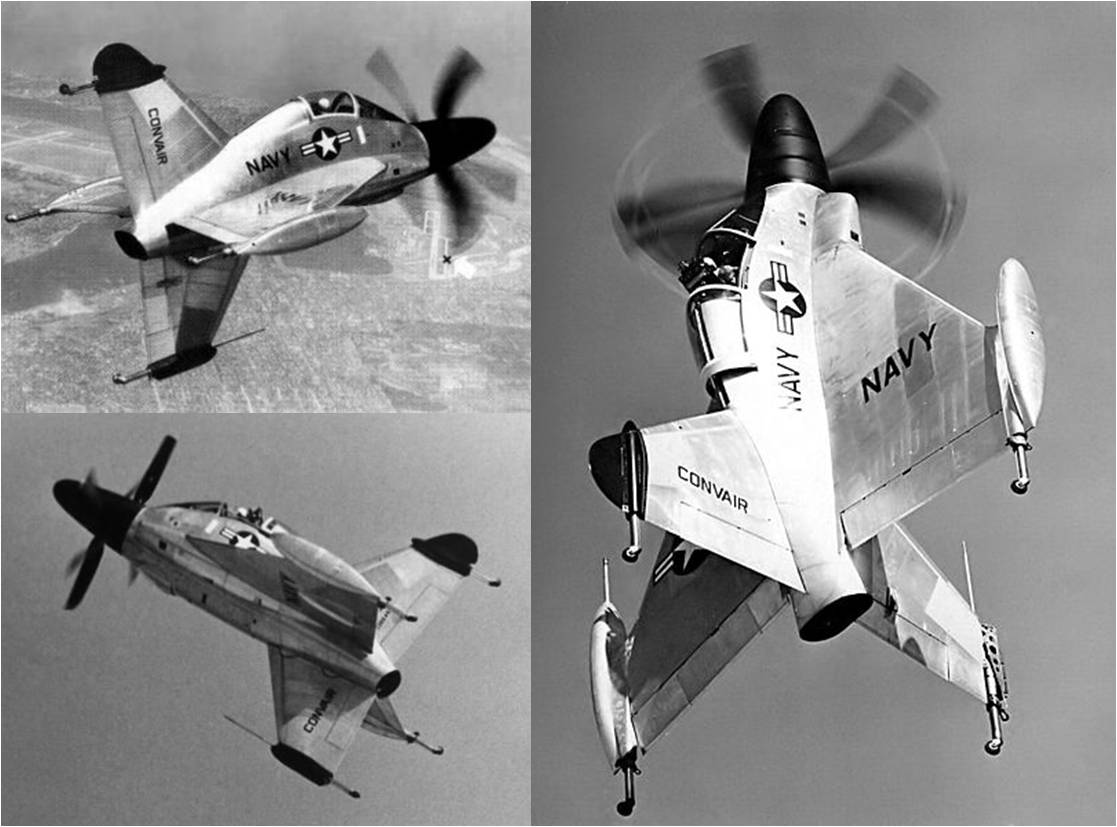
Fifty-six years ago this week, the USN/Convair XFY-1 became the first Vertical Take-Off and Landing (VTOL) aircraft to successfully transition from vertical to horizontal flight. The historic flight was piloted by famed Convair engineering test pilot James F. “Skeets” Coleman.
Motivated by World War II lessons-learned, the United States Navy began contemplating the feasibility of using VTOL aircraft for fleet defense in 1947. A VTOL aircraft would combine the vertical take-off and landing capabilities of a helicopter with the speed and agility of a fighter. The operational advantage and flexibility derived from basing such an aircraft on non-aircraft carrier naval vessels were powerful allurements indeed.
In May of 1951, the Navy awarded contracts to Lockheed and Convair to develop and flight test an experimental VTOL aircraft. The Lockheed offering was designated as the XFV-1 while Convair’s version became known as the XFY-1. Both companies were to produce two (2) test aircraft each. History records that each company would ultimately produce just a single copy of its respective prototype.
Convair nicknamed its VTOL aircraft Pogo after the Pogo Stick jumping toy popularized by an earlier generation of American youth. Such appellation referred to the XFY-1’s tendency to bounce on its quartet of shock-absorbered landing gear at touchdown. The similarity to one bouncing up and down on a spring-loaded Pogo Stick is obvious.
The XFY-1 Pogo measured 35 feet in length and had a wing span of nearly 29 feet. The type had a GTOW of 16,250 lbs and an empty weight of 11,750 lbs. Power was provided by a 5,500 hp Allison YT-40 turboprop which drove twin, 3-blade, 16-foot diameter contra-rotating propellers. This propulsion system produced a maximum thrust of 17,000 lbs.
The Pogo was difficult to fly vertically in close proximity to the ground. Prop-wash interaction with the aircraft and ground plane being the chief culprit. Even more difficult was the transition from vertical to horizontal flight and back again. It was particularly challenging to land the aircraft as the pilot had to look over his shoulder and “back down” to a landing.
The XFY-1 pilot sat in a seat that rotated to accommodate vertical and horizontal flight attitudes as appropriate. Pilot cockpit entry was via a 25-foot auxiliary ladder. Interestingly, the pilot was provided with a 25-foot rope for emergency egress during ground operations.
James F. “Skeets” Coleman was Convair’s project test pilot for XFY-1 flight tests. Coleman began tethered flight testing of the aircraft on Thursday, 29 April 1954 at NAS Moffett Field, California. Roughly 60 hours of tethered-flight testing took place within Moffett’s cavernous Hanger Number One. With a ceiling height of 195 feet, the building provided ample room for initial XFY-1 vertical flight testing.
On Sunday, 01 August 1954, Coleman made the first untethered XFY-1 flight test in the vertical. Following several more successful vertical take-off and landing trials, XFY-1 flight test activities were transferred to NAS Brown Field near San Diego, California. There, Coleman intently practiced (making 70 flights overall) in anticipation of the first attempt to transition the XFY-1 from vertical to horizontal flight.
On Tuesday, 02 November 1954, with Skeets Coleman at the controls, the XFY-1 lifted-off in the vertical from Brown Field. Coleman then carefully and skillfully transitioned the XFY-1 to horizontal flight for the first time. In 21 minutes of horizontal flight, Coleman put the nimble XFY-1 through its paces. The Pogo’s big Allison turboprop had power to spare as Coleman hit airspeeds well in excess of 300 mph.
When it was finally time to land the XFY-1, Coleman made a low altitude, minimum power approach and pulled into the vertical. As the aircraft quickly ascended, the airspeed bled-off just as rapidly. Near the top of the climb, Coleman advanced the throttle. The XFY-1 hung in the cool autumn air on the thrust of its twin props alone. The pilot then carefully descended from about 1,000 feet AGL and landed uneventfully.
Skeets Coleman made many more flights in which he demonstrated the Pogo’s VTOL capabilities. However, USN interest in the VTOL concept in general and the XFY-1 aircraft in particular began to wane. While the XFY-1 had indeed demonstrated the feasibility of VTOL flight, it also revealed the operational impracticality of such given the technology of the time.
The Achilles Heel of the Convair XFY-1 VTOL aircraft was the vertical landing phase. The pilot just could not judge rate-of-descent accurately. This was attributed partly to the fact that he had to look over his shoulder throughout the descent. In addition, XFY-1 throttle-induced lateral-directional handling qualities were poor and forced the pilot to work very hard at landing the aircraft even in low-wind conditions.
Skeets Coleman made the last flight of the XFY-1 experimental aircraft on Thursday, 16 June 1955. For his significant piloting efforts in successfully demonstrating the feasibility of the VTOL concept, he received the 1954 Harmon Trophy. The lone Convair XFY-1 Pogo test aircraft survived the flight test program and is currently held in the historical collection of the National Air and Space Museum.
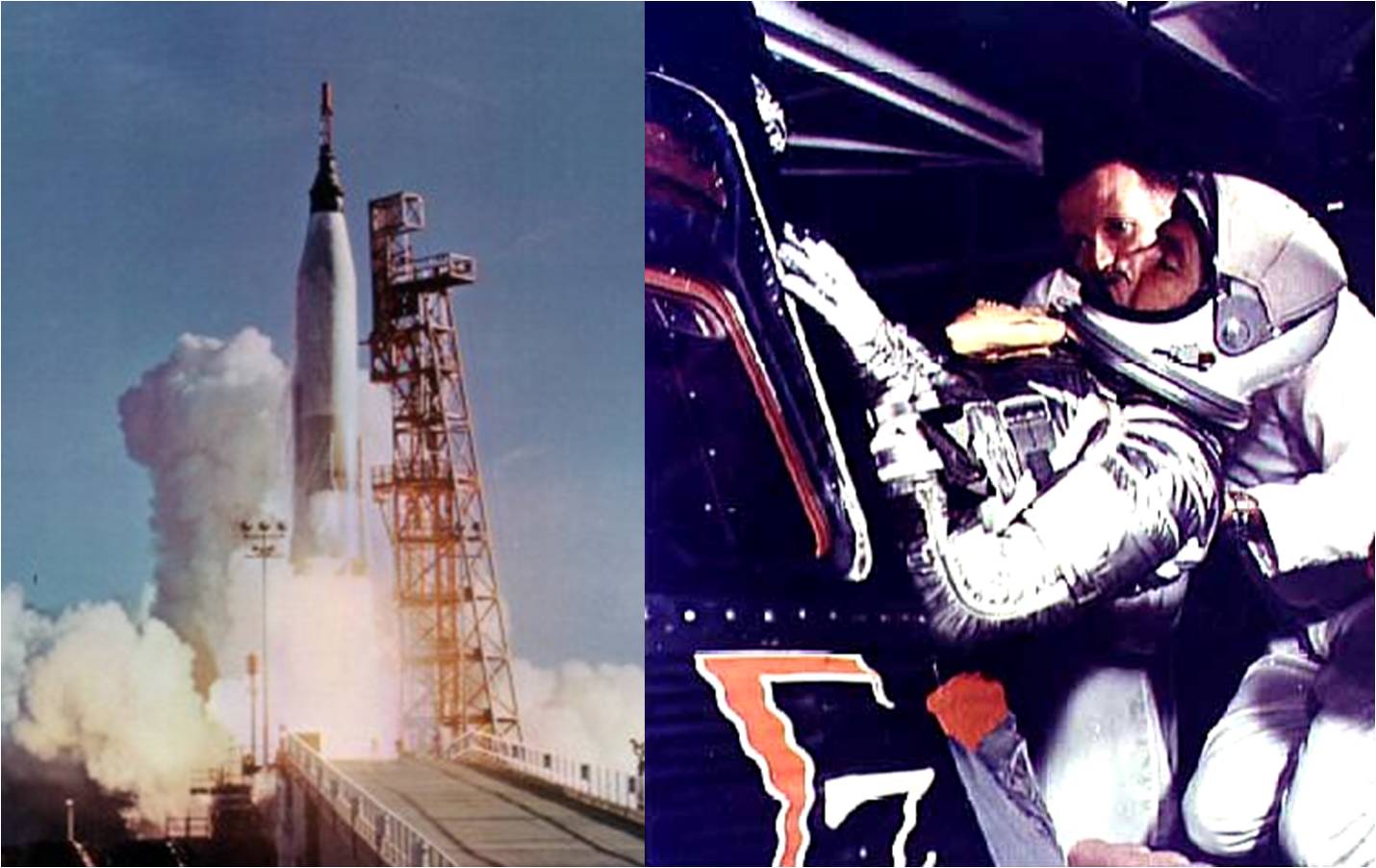
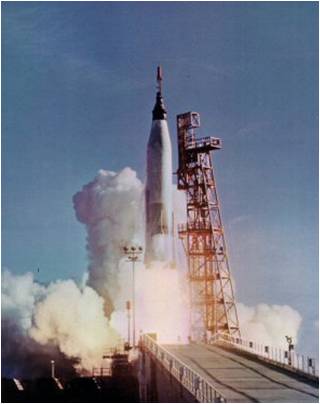
Forty-eight years ago this month, Mercury Astronaut Walter M. Schirra, Jr. orbited the Earth six (6) times in his Mercury spacecraft code-named Sigma 7. The near-perfect 9-hour spaceflight was the United States’ third manned orbital mission flown within a period of eight (8) months.
Project Mercury was United States’ first manned spaceflight program. This historic pioneering space effort helped lay the foundation for America’s quest for the Moon. A total of six (6) missions (2 sub-orbital and 4 orbital) was flown between May of 1961 and May of 1963.
The Mercury Spacecraft measured 11.5 feet in length and had a diameter of 6.2 feet. Orbital weight was roughly 3,000 pounds. With a cockpit volume of only 60 cubic feet, an astronaut’s corporeal fit inside the spacecraft was exceedingly tight. Vehicle entry and egress was a real shoe-horning process. It is not complete hyperbole to say that, once inside, an astronaut wore, more than rode in, the Mercury space vehicle.
Despite its dimunitive size, the Mercury Spacecraft was an able spacefaring ship. Indeed, it was configured with a complete suite of life support, navigation, attitude control, communications, deboost, recovery and thermal protection systems. Aided by a vast national mission support team, recovery force, and world-wide tracking system, the Mercury spaceflight effort was entirely successful in establishing America in space.
America’s first astronauts were known as the Mercury Seven. History records their names; Shepard, Grissom, Glenn, Carpenter, Schirra, Cooper and Slayton. In the tense 1960’s Space Race with the Soviet Union, these men were indeed America’s Single-Combat Warriors immortalized by writer Tom Wolfe in his classic, The Right Stuff.
Mercury-Atlas No. 8 (MA-8) was the fifth Mercury mission. Whereas the two (2) previous flights had been three (3) orbit missions, MA-8 was scheduled to orbit the Earth six (6) times. The focus would be on spacecraft operations instead of space science. The intent was to verify that the Mercury spacecraft could be cleared for an orbital mission duration of at least 24 hours on the very next flight
As was the custom for a Mercury astronaut, Schirra personally named his orbital steed. As such, Schirra chose the name Sigma 7. The term Sigma, the Greek mathematical symbol for summation, signified a summation or culmination of flight experience and engineering development that led to a mature Mercury Spacecraft system. The numeral 7 represented the Mercury Seven.
The MA-8 mission began with lift-off from Cape Canaveral’s LC-14 at 12:15:12 UTC on Wednesday, 03 October 1962. The Atlas D launch vehicle placed Schirra into a 152.8-nm x 86.9-nm orbit. Once in orbit, Schirra quickly got down to business. This included tracking the Atlas booster, maneuvering the spacecraft, observing and photographing the Earth, and conducting various scientific experiments.
Schirra did a particularly good job at conserving the precious supply of Reaction Control System (RCS) fuel. One of the MA-8 objectives had been to do so. In fact, Schirra conserved fuel even more efficiently than planned. Other than an annoying and uncomfortable spacesuit heating problem that occurred several times, the entire MA-8 mission was what Schirra would ultimately call “textbook”.
MA-8 retro-fire occurred at 21:07:12 UTC. During the reentry, the automatic rate stabilization system damped spacecraft pitch and yaw oscillations. Drogue and main parachute deployment took place at 40,000 feet and 15,000 feet, respectively. Splashdown in the Pacific Ocean occurred 1,200 nm northwest of Hawaii at 21:28:22 UTC.
The success of MA-8 paved the way to Gordon Cooper’s historic 22-orbit, 34-hour MA-9 mission in May of 1963. The Gemini and Apollo Programs would soon follow. Wally Schirra would play a big part in both. He commanded the historic Gemini 6 orbital rendezvous mission in December of 1965. Schirra also went on to command the critical Apollo 7 mission in October of 1968.
Wally Schirra was the only member of the Mercury Seven to orbit the Earth in Mercury, Gemini and Apollo spacecraft.
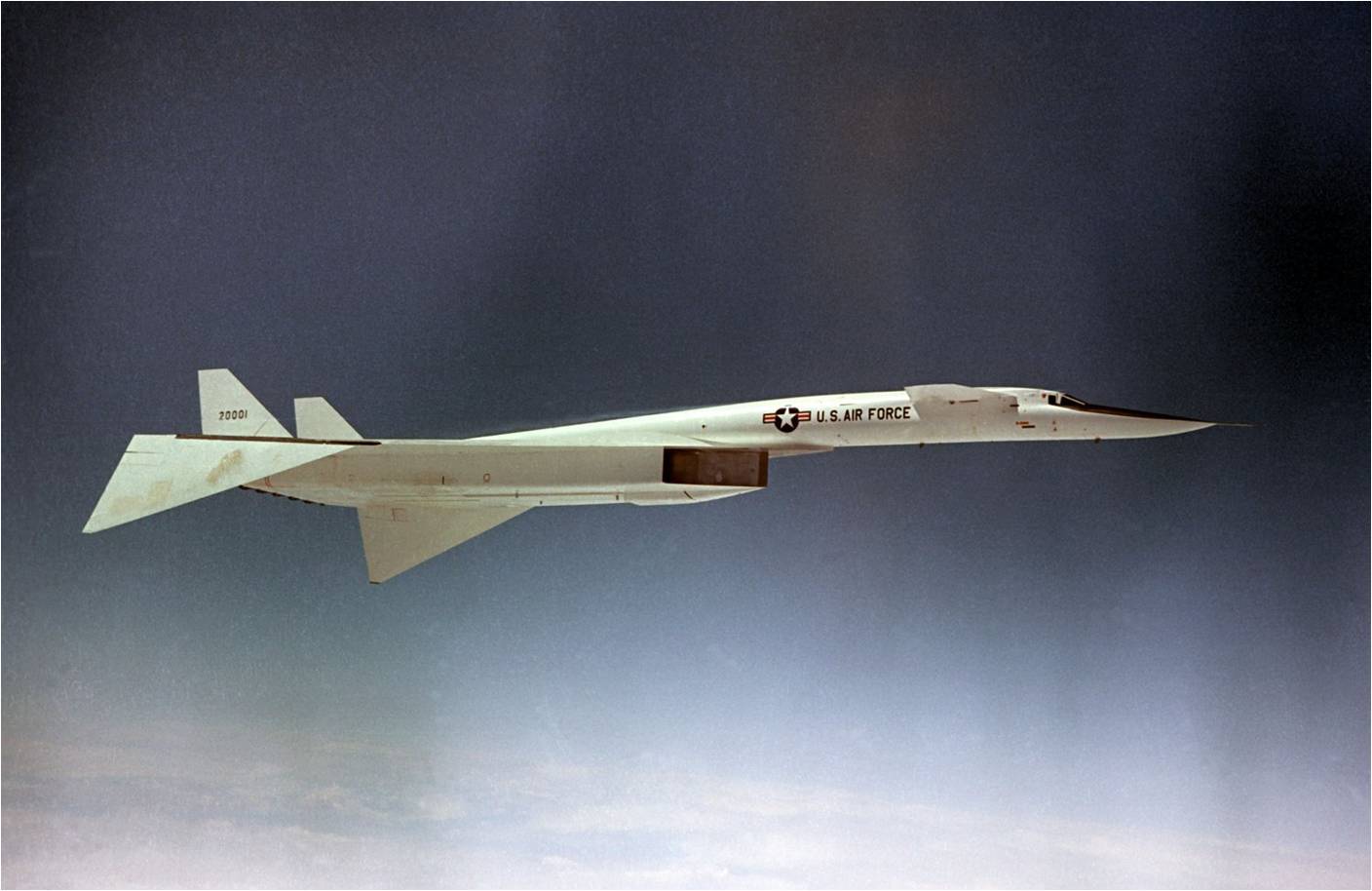
Forty-five years ago this month, the USAF/North American XB-70A Valkyrie reached three times the speed of sound for the first time. The historic aviation achievement took place on the 18th anniversary of the breaking of the sound barrier by the USAF/Bell XS-1.
When it comes to legendary aircraft, aviation enthusiasts speak in almost reverent terms about the XB-70A Valkyrie. Indeed, few aircraft have evoked such utter awe or symbolized better the profound majesty of flight than the “The Great White Bird”. Though its flight history was brief, the XB-70A’s influence on aviation has proven to be of enduring worth.
The Valkyrie measured 185 feet in length, had a wingspan of 105 feet and an empty weight of 210,000 pounds. With a GTOW of 550,000 pounds, it was the heaviest supersonic-capable aircraft of all-time. The aircraft was powered by a six-pack of General Electric YJ93-GE-3 turbojets totaling 172,200 pounds of thrust in afterburner.
To enhance lift-to-drag ratio and directional stability at high Mach number, the Valkyrie was configured with wing tips that could be deflected downward as much as 65 degrees. Each wing tip was the size of an USAF/Convair B-58A Hustler wing panel. To this day, the XB-70A deflectable wing tip is the largest control surface ever used on an aircraft.
The XB-70A was originally intended to be a supersonic strategic bomber. The aircraft’s mission was to penetrate Soviet airspace at Mach 3 and deliver nuclear ordnance from an altitude of 72,000 feet. However, the rapid ascendancy of Soviet surface-to-air missile capability would compromise the type’s military mission before it even flew.
As a consequence of the above, the Valkyrie ultimately became a high-speed flight research aircraft. Only two (2) copies were constructed and flown. Ship No. 1 (S/N 62-0001) made its maiden flight on Monday, 21 September 1964 while Ship No. 2 (62-0207) first took to the air on Saturday, 17 July 1965.
XB-70A Ship No. 1 became the first Valkyrie to hit Mach 3. It did so while flying at an altitude of 70,000 feet on Thursday, 14 October 1965. The flight crew consisted of North American Aviation test pilot Alvin S. White (aircraft commander) and USAF Colonel Joseph Cotton (co-pilot).
The XB-70A aircraft flew all of their flight research missions out of Edwards Air Force Base in California. Between September of 1964 and February of 1969, a total of 129 XB-70A research flights took places; 83 by Ship No. 1 and 46 by Ship No. 2. A total of nearly 253 flight hours was amassed by the aircraft.
The XB-70A Program made significant contributions to high-speed aircraft technology including aerodynamics, aerodynamic heating, flight controls, structures, materials, and air-breathing propulsion. Lessons-learned from its flight research have been applied to numerous aircraft developments including the B-1A, American SST, Concorde and the TU-144.
XB-70A Ship No. 1 survived the flight test program while Ship No. 2 did not. The latter was destroyed in a mid-air collision with a NASA F-104N on Wednesday, 08 June 1966. Today, XB-70A Ship No. 1 can be seen at the National Museum of the United States Air Force at Wright-Patterson Air Force Base in Dayton, Ohio.
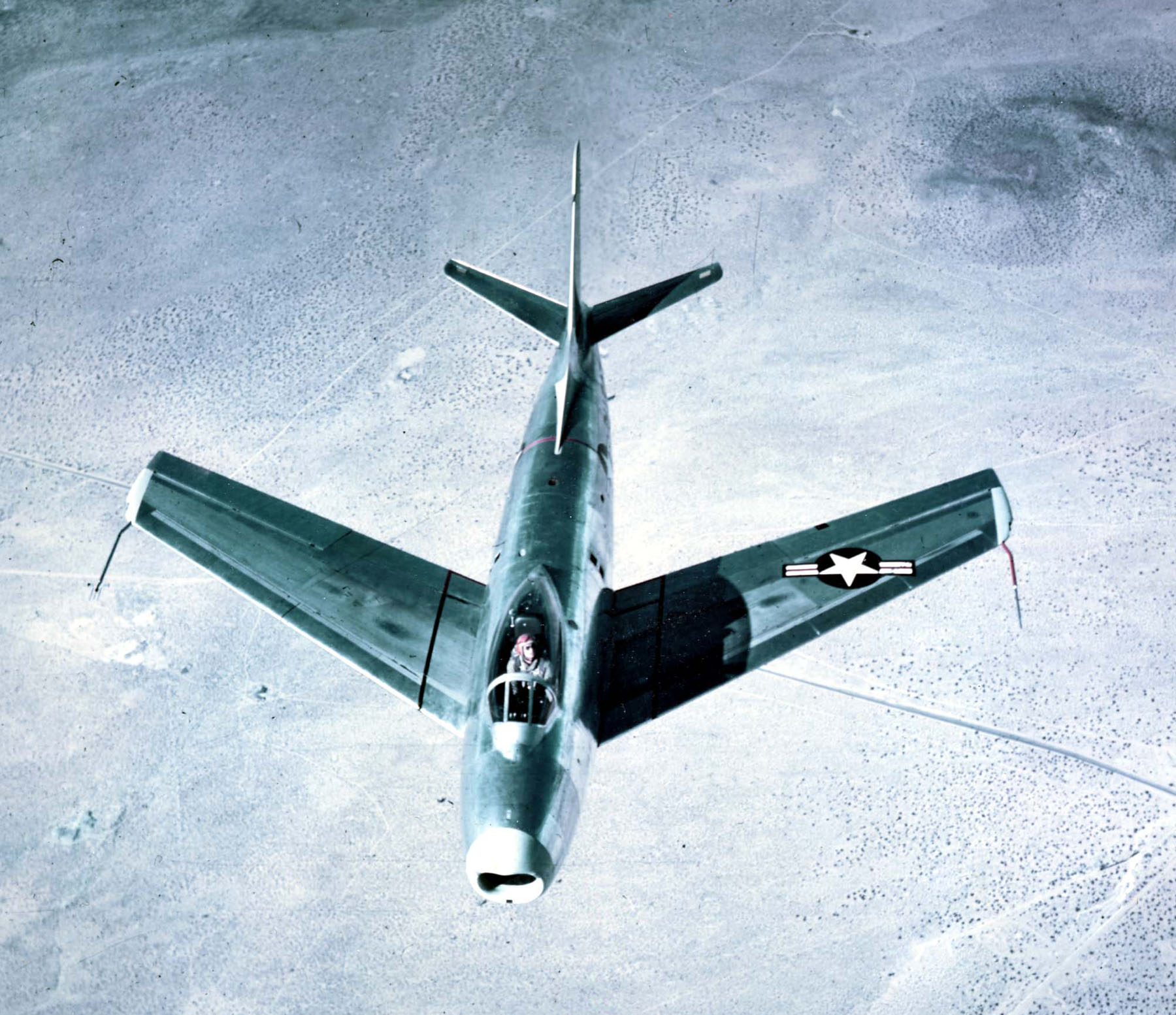
Sixty-three years ago this month, the swept-wing XP-86, the initial version of the famed USAF/North America F-86 Sabre, began flight testing at what is now Edwards Air Force Base. The popular Mig Alley legend would be produced in numerous variants and ultimately rack-up a total production run of nearly 10,000 aircraft worldwide.
In the waning days of World War II, the United States Army Air Force (USAAF) issued the requirements for a new high-speed, jet-powered fighter/interceptor aircraft. North American Aviation (NAA) captured the USAAF’s attention with a prototype swept-wing aircraft known as the XP-86. The “X” designation was shorthand for Experimental while the “P” stood for Pursuit.
The XP-86 (later designated as the XF-86 where “F” stood for Fighter) was the first United States fighter to incorporate wing sweep. The key benefit derived from sweeping the wings was to greatly reduce transonic wave drag. Based on aerodynamics data captured from the defeated Third Reich, NAA engineers designed the XF-86 with a wing sweep of 35 degrees.
A drawback to using wing sweep is that low-speed flight characteristics are adversely affected. The principal detrimental effect being a reduction in lift. However, NAA solved this problem by the incorporation of leading edge slats to enhance lift production at low speed.
The XF-86 measured roughly 37-feet both in length and wingspan. Empty weight was some 12,000 lbs. Power was provided by a Chevrolet J35-C-3 turbojet that generated a paltry 3,750 pounds of thrust. Later variants of the Sabre would be powered by jet engines generating nearly 10,000 pounds of thrust.
On Wednesday, 01 October 1947, XF-86 No. 1 took to the air for the first time from Muroc Army Air Field, California. USAAF Major and WW II 16-kill ace George S. “Wheaties” Welch was at the controls of the XF-86. Intestingly, the historical record strongly suggests that Welch exceeded the speed of sound during a dive on that first flight test.
The case of George Welch is an intriguing sub-plot of the F-86 Sabre story. Welch was stationed at Pearl Harbor on 07 December 1941. He was one of the very few American pilots to get in the air and fight the attacking Japanese forces. Numerically overwhelmed, he nontheless splashed four (4) enemy aircraft and lived to fly and fight another day.
Welch served three (3) combat tours in WW II for a total of 348 combat missions. After leaving the service in 1944, he joined North American Aviation as a test pilot. Welch progressed quickly and became NAA’s Chief Test Pilot. This path ultimately led to Welch flight testing the XP-86 Sabre.
Although denied verification in official Air Force records, both oral history and strong circumstantial evidence points to the high likelihood that Welch exceeded Mach 1 at least twice before the Bell XS-1 did so on Tuesday, 14 October 1947.
Incredibly, the first instance of Welch and the XF-86 exceeding Mach 1 was on the occasion of its first flight test! Welch dove the aircraft from 35,000 feet and reportedly generated a weak sonic boom.
The second instance of Mach 1 exceedance reportedly occurred on Tuesday, 14 October 1947. This time Welch dove the XF-86 from 37,000 feet and generated a stronger sonic boom. Apparently, this event took place just before the Bell XS-1, with USAAF Major Charles E. “Chuck” Yeager at the controls, achieved Mach 1.06 later that same morning.
Welch was never officially credited with being the first to achieve supesonic flight. A number of reasons account for this circumstance. First, his aircraft was not instrumented properly to verify flight performance at quasi-supersonic speeds. Additionally, Welch’s aircraft was not tracked by radar.
In addition to the technical reasons cited above, there was political intrigue surrounding Welch’s supersonic dive flights as well. NAA (and thus Welch) had been ordered not to exceed Mach 1 before the rocket-powered Bell XS-1 did so. Perhaps the only concession accorded Welch was that USAF later referred to Yeager’s historic superonic flight as the first time the sound barrier was broken in level flight.
George Welch went on to a distinguished, but all too brief flight test career. On Monday, 25 May 1953, he became the first man to exceed Mach 1 in level flight in a jet-powered production aircraft. That aircraft was the North American F-100 Super Sabre. Welch perished on Tuesday, 12 October 1954 when his YF-100A went out of control and distintegrated during a 7-g pull-up at Mach 1.55.
For its part, the F-86 Sabre ultimately served long and well in the air forces of the United States and a host of other western-friendly nations. Perhaps its greatest claim to fame accrues from the type’s remarkable aerial combat perfromance in the Korean War. Indeed, despite being numerically bested by Soviet-built MIG-15 aircraft, the official record shows that USAF pilots made 792 kills flying the Sabre. Compared with 76 kills made by the opposition, the Sabre registered a phenomenal 10:1 kill ratio.
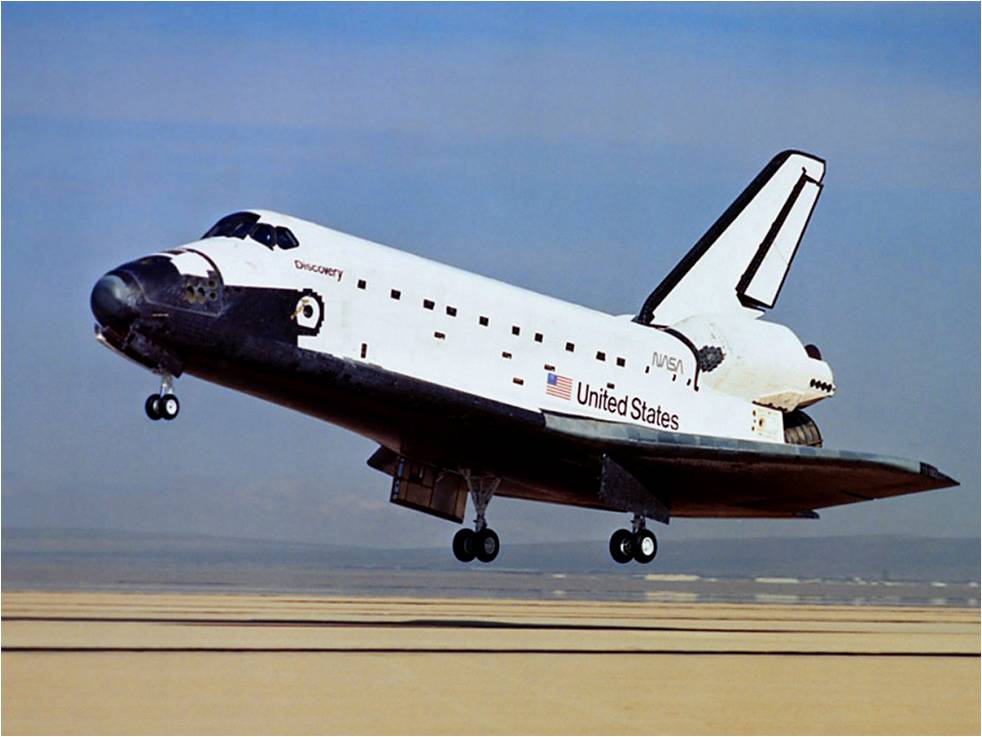
Twenty-two years ago this week, the Space Shuttle Discovery and its five man crew landed on Rogers Dry Lake at Edwards Air Force Base to successfully complete the Return-to-Flight (RTF) mission of STS-26. The flight signaled a resumption of the Space Shuttle Program after a 32-month hiatus in manned spaceflight resulting from the Challenger disaster.
Well chronicled is the tragic loss of the Space Shuttle Challenger and its crew of seven on Tuesday, 28 January 1986. Following lift-off at 16:38 UTC from Cape Canaveral’s LC-39B, the launch vehicle distintegrated 73 seconds into flight. The presidentially-appointed Rogers Commission concluded that the primary cause was failure of an O-ring seal in a field joint of the right Solid Rocket Booster (SRB).
While the SRB O-ring failure was the physical cause of the Challenger mishap, the Rogers Commission brought to light a more fundamental and disturbing reason for the tragedy. Specifically, the very decision to launch Challenger on that unusally cold January morning in Florida was fundamentally flawed.
As chillingly delineated in Dianne Vaughan’s “The Challenger Launch Decision”, a culture of deviance with respect to Shuttle flight safety issues had slowly developed at NASA. Pressure to launch, scarce resources and organizational disconnects contributed to NASA management’s blind spot when it came to Shuttle flight safety. The SRB contractor was culpable as well and for the same reasons.
Following redesign and testing of the SRB field joints and the implementation of a myriad of other fixes, NASA prepared to return the Shuttle to flight. The mission was designated as STS-26. To the Space Shuttle Discovery would go the honor of and the responsibility for flying the RTF mission. STS-26 was to be a five day orbital mission.
A five-member crew was selected by NASA to fly STS-26. Each crew member had spaceflight experience. You remember their names. Mission Commander Frederick H. “Rick” Hauck, Pilot Richard O. Covey, and Mission Specialists John M. “Mike” Lounge, George D. “Pinky” Nelson and David C. Hilmers.
Discovery and her brave crew lifted-off from at 15:37 UTC on Thursday, 29 September 1988 from the very same location that Challenger did; LC-39B at Cape Canaveral, Florida. Millions watched that day. Some were in the big crowds that formed in and around the Cape complex. Most observed the event on television. Many prayed.
All who watched Discovery lift-off that day remembered the previous Shuttle flight. Indeed, they remembered what happened just after the CAPCOM’s call: “Challenger, go at throttle-up.” (Ironically, Richard Covey was the CAPCOM who made that very call.) Today, they heard a similar call over the Shuttle communications network: “Discovery, go at throttle-up.” A collective breath was held. After throttle-up, Discovery continued all the way to orbit. YES!!!
The mission itself seemed to be anti-climatic. A Tracking and Data Relay Satellite (TDRS) was deployed from Discovery’s payload bay to replace the one lost in the Challenger explosion. A multitude of space experiments was conducted by the crew. Fairly standard stuff. Only deboost, the rigors of reentry and the typical dead-stick landing lay ahead.
Discovery landed on Runway 17 at Edwards Air Force Base on Monday, 03 October 1988. Main gear touchdown occurred at 16:37 UTC. Approximately, 450,000 American’s witnessed Discovery’s landing in person. A few who did had witnessed its launch in person as well.
The emotion that attended Discovery’s landing in October 1988 was simply overwhelming. Indeed, the experience was an integral part of the healing process for a Nation that still grieved the loss of Challenger and her crew. A Time magazine cover page headline the following week excitedly read: “Whew! America Returns to Space” And indeed it had.